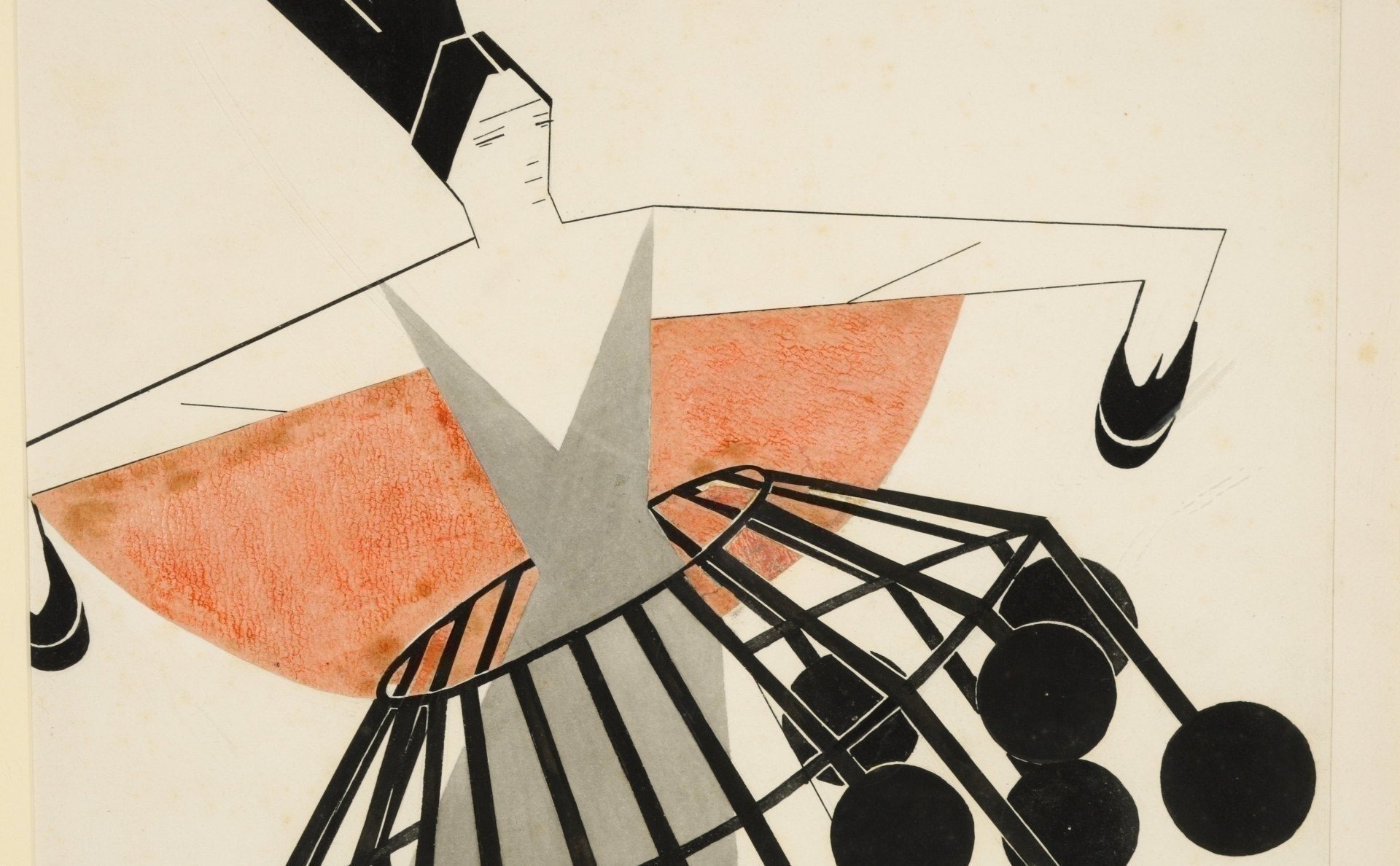
Rejecting traditional artistic conventions and representational imagery, it emphasized pure abstraction, focusing on simple geometric forms such as squares, circles, and triangles. These shapes, often painted in vibrant colors, were used to express universal emotions and spiritual truths.
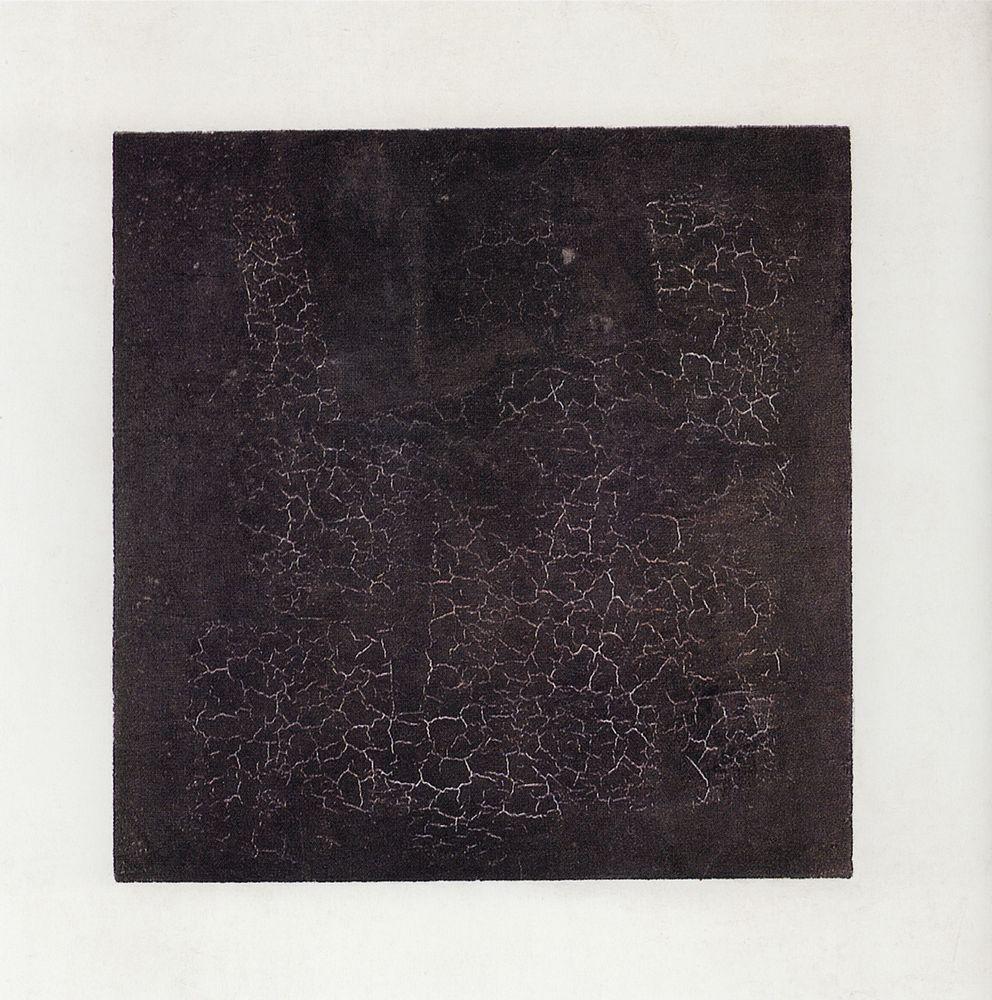
Emerging in the context of rapid industrialization and cultural transformation, Suprematism represented a radical break from the past. Malevich introduced the movement through his manifesto, Świat bezobiektowy, gdzie sformułował filozofię priorytetu czystego uczucia nad przedstawianiem rzeczywistości fizycznej. Jego ikoniczne dzieło, Czarny kwadrat (1915), positioned as a sacred icon in the "red corner" of an exhibition, symbolized the ultimate reduction of art to its duchowe jądro.
"The artist can be a creator only when the forms in his picture have nothing in common with nature." - Kazimir Malevich
Suprematism’s focus on abstraction and reduction resonated with a quest for universal truth, transcending individual and national contexts. Its principles laid the groundwork for modern abstract movements, influencing disciplines like architecture, design, and minimalism. Suprematism became a cornerstone of modern abstraction, influencing architecture, graphic design, and movements like Bauhaus and Minimalism. Its focus on geometryczny redukcjonizm and duchowa transcendencja challenged traditional notions of art, offering a fresh perspective on the artist’s role in shaping society and culture. By stripping art down to its simplest elements, Suprematism redefined creativity, setting the stage for countless innovations in the 20th century.
Początki i Ewolucja
Narodziny Suprematyzmu
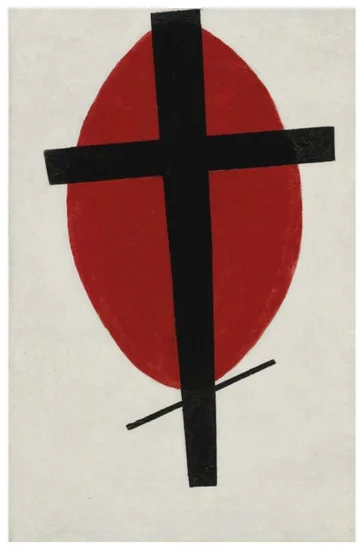
Suprematism emerged through the vision of Kazimir Malevich, a revolutionary artist determined to transform art by eliminating representational imagery. Malevich presented Suprematism during the Last Futurist Exhibition of Paintings 0,10 in Petrograd, where he displayed his groundbreaking work, Czarny kwadrat. Umieszczony w „kącie ikony”, tradycyjnym miejscu dla religijnych ikon w rosyjskich domach, Czarny kwadrat emphasized the spiritual dimension of his artistic vision. This moment signaled a radical departure from representational art and traditional European artistic norms. Suprematism embraced pure abstraction, focusing on geometric shapes such as squares, circles, and crosses to express "the supremacy of pure artistic feeling."
Uformalizowanie ruchu
Kazimierz Malewicz sformułował zasady Suprematyzmu w swoim manifestie, Świat bezobiektowy, opublikowanym w 1927 roku. W tym przełomowym tekście argumentował, że sztuka powinna odrzucić materializm i przedstawianie świata fizycznego, koncentrując się zamiast tego na wyrażaniu czystego artystycznego uczucia through abstract geometric forms. Malevich believed that shapes such as squares, circles, and crosses held the power to convey universal emotions, offering a spiritual connection that transcended cultural and temporal boundaries. This radical departure from representational art underscored his belief in the przewagi uczucia nad formą.
Aesthetic Concept
Estetyczna koncepcja Suprematyzmu obraca się wokół idei czystej abstrakcji, emphasizing basic geometric forms such as squares, circles, and lines. This movement sought to liberate art from the constraints of realism and representation, focusing instead on the pierwszeństwa uczucia as expressed through form and color. According to Kazimir Malevich, the founder of Suprematism, "The artist can be a creator only when the forms in his picture have nothing in common with nature." This approach marked a radical shift, prioritizing duchowego wyrazu nad materialnymi troskami.
"The square is not a subconscious form. It is the creation of intuitive reason." – Kazimir Malevich
Przewaga czystego uczucia
Malewicz wierzył, że prawdziwe artystyczne wyrażenie wywodzi się z istoty uczucia rather than imitating the physical world. Suprematist compositions typically use a limited palette, often featuring black, white, and primary colors, to evoke emocjonalnego rezonansu. The simplicity of the shapes was not arbitrary but designed to convey the najczystszych form ludzkiego doświadczenia. Malewicza Czarny kwadrat epitomizes this principle, acting as a symbol of the movement's rejection of traditional artistic norms and its commitment to the supremacy of the spiritual in art.
Geometria i sztuka bezobiektowa
Suprematism's reliance on geometric abstraction was a deliberate choice to achieve universality. Malevich stated, "The rectangular plane and the circle transcend the boundaries of the human condition." The movement introduced a revolutionary approach to composition, where balance and harmony emerged from the placement of basic forms. This geometry served as a visual language free from cultural or historical associations, making it a universal method of communication. It also set the groundwork for future movements like Constructivism and Minimalism.
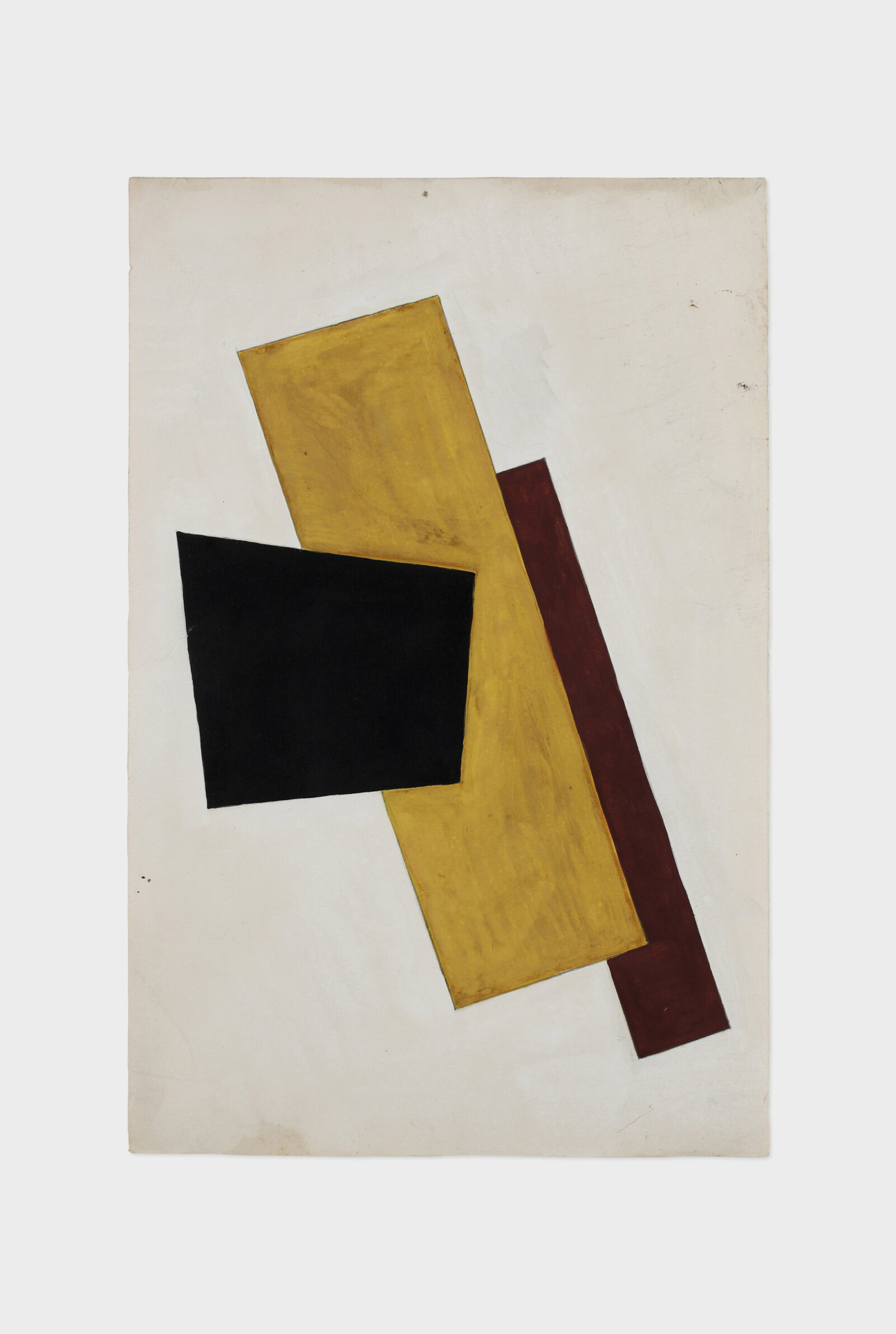
Themes and Motifs
Suprematism emphasizes geometric abstraction, relying on simple shapes like squares, circles, and crosses to convey universal ideas. Stripped of representational meaning, these forms highlight pure artistic expression and reject the material world, as seen in Kazimir Malevich’s iconic Czarny kwadrat. The movement’s limited color palette—from stark black and white to primary colors like red, yellow, and blue—creates clarity and balance, amplifying the dynamic energy of compositions. White backgrounds symbolize infinity and freedom, reinforcing Suprematism’s spiritual transcendence.
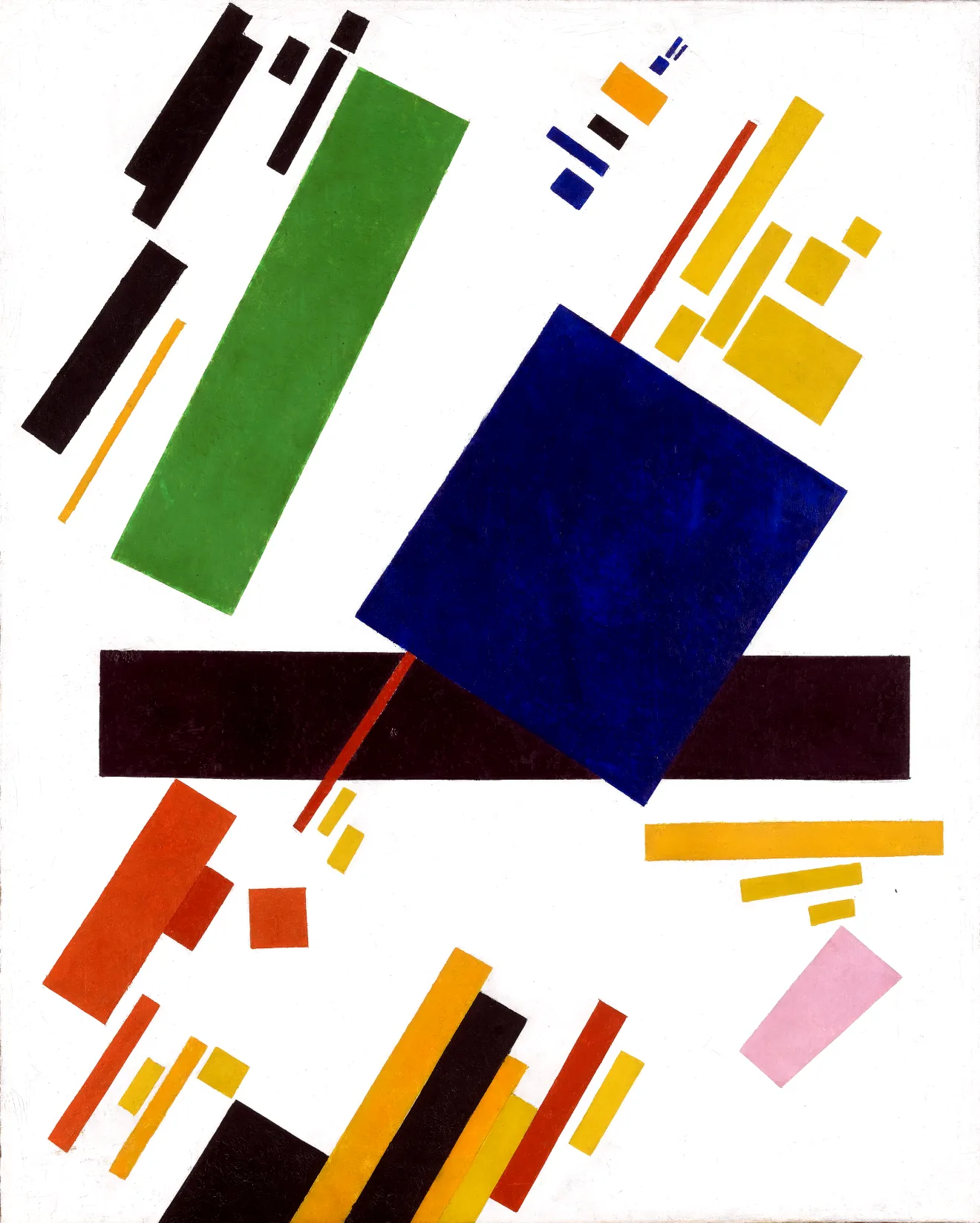
Dzieła suprematyzmu często wykazują dynamiczny ruch poprzez asymetryczne układy, odzwierciedlając fascynację awangardy prędkością i transformacją. Dzieła takie jak Kompozycja suprematyzmu: Latający samolot embody this motion, while reductionism strips art to its essentials, emphasizing universal emotional resonance. Malevich’s goal of non-objective universality sought to transcend cultural and personal contexts, using abstraction to evoke timeless feelings. The interplay of colors and void-like spaces symbolizes boundless possibility and offers a meditative experience. These themes—abstraction, transcendence, and reduction—establish Suprematism as a groundbreaking movement that revolutionized modern art.
Impact and Influence
Suprematism profoundly influenced modern art, architecture, and design by introducing a radical approach to abstraction and non-objectivity. Its emphasis on formy geometryczne and duchowa transcendencja zainspirowane ruchy takie jak Constructivism, De Stijl, i Bauhaus, kształtując estetyczne fundamenty modernizmu. Skupienie ruchu na prostocie i uniwersalnym wyrazie położyło podwaliny pod Minimalism and Abstract Expressionism, encouraging artists to explore pure forms and emotional resonance. Suprematism’s principles extended beyond visual arts, impacting architecture and graphic design through its exploration of spatial relationships and reductionist aesthetics. Its legacy remains vital, embodying the transformative potential of abstraction and artistic innovation.
Wpływ na współczesne ruchy artystyczne
Suprematism revolutionized abstract art by emphasizing geometric forms and the supremacy of pure artistic feeling. Its radical rejection of representation inspired later movements like De Stijl, Constructivism, and Bauhaus, which integrated its principles into their exploration of abstraction and design. Suprematism’s influence is particularly evident in Minimalism, which adopted its reductionist approach to art, stripping away unnecessary elements to focus on form and composition. Kazimir Malevich’s philosophy also shaped the work of Abstract Expressionists, who emphasized emotional resonance through abstraction.
Wpływ na architekturę i design
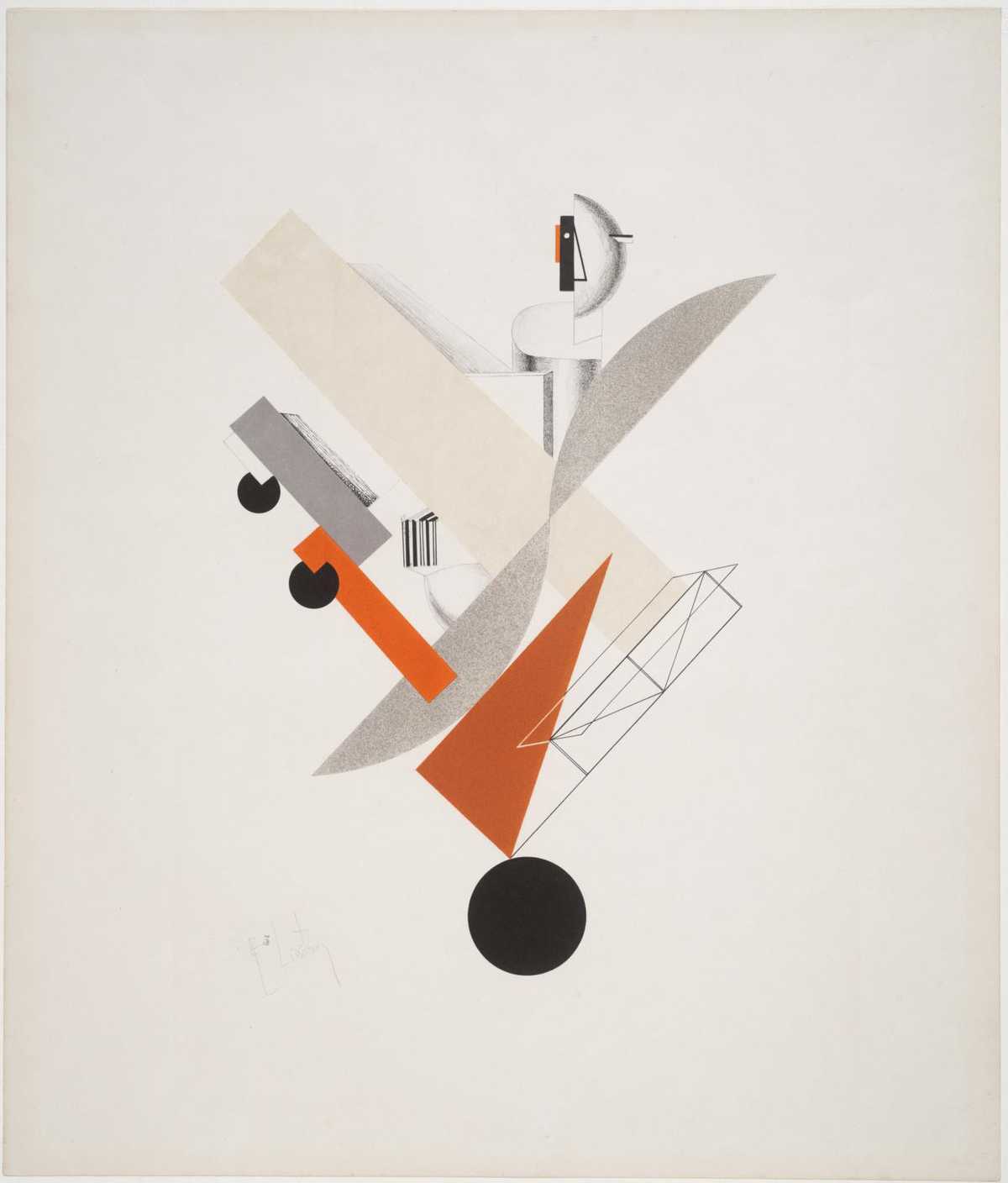
Akcent Suprematyzmu na geometrię i relacje przestrzenne wykraczał poza malarstwo na architecture and projektowanie przemysłowe. El Lissitzky, jeden z wybitnych zwolenników Suprematyzmu, zastosował jego zasady w swoim Proun series, which explored the transition from two-dimensional art to three-dimensional space. These ideas influenced modern architectural practices, inspiring structures with bold, abstract forms. The movement also laid the groundwork for functional, geometric designs in furniture, graphic design, and even city planning, emphasizing clarity and purpose.
Trwałe dziedzictwo
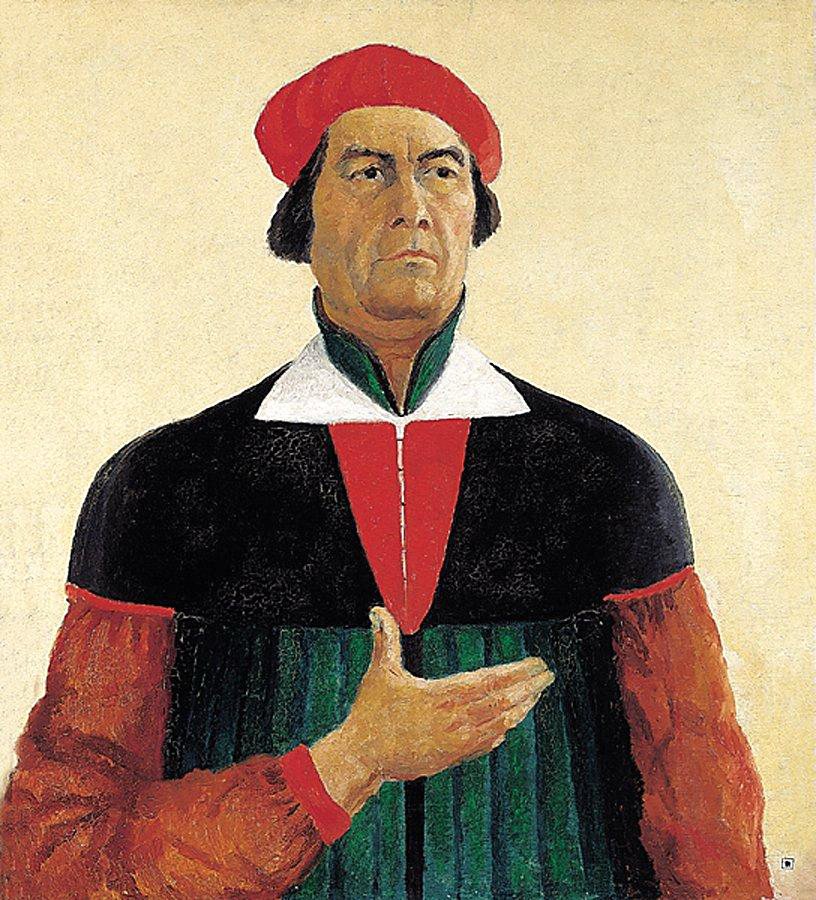
Skupienie Suprematyzmu na duchowa transcendencja, universal symbolism, and geometric abstraction remains a cornerstone of modern and contemporary art. Its principles continue to inspire artists and designers in exploring minimalism, abstraction, and non-objective art. As Kazimir Malevich stated, "The new realism in painting is to create new forms that have nothing in common with reality." This idea has transcended its era, influencing artistic practices worldwide and asserting the relevance of Suprematism in art’s ongoing evolution.
These profound impacts demonstrate Suprematism’s enduring role in shaping art, architecture, and design, leaving a lasting legacy across disciplines.
Przykłady reprezentatywne
Czarny Kwadrat autorstwa Kazimierza Malewicza (1915)
Czarny kwadrat is the most iconic work of Suprematism and a cornerstone of modern abstract art. It symbolizes the "zero point of painting," representing a radical break from traditional representation. Malevich intended the square to embody czysta emocja i przewaga sztuki nieobiektywnej, wolnej od ograniczeń świata materialnego.
Significance: Malewicz opisał dzieło jako „tworzenie intuicyjnego rozumu”, podkreślając jego filozoficzną głębię. Czarny kwadrat laid the foundation for Suprematism, inspiring movements like Minimalism and Abstract Expressionism. Its stark simplicity continues to provoke discussions about the nature of art, emotion, and abstraction, solidifying its place as one of the most influential artworks in history.
Kompozycja Suprematyczna autorstwa Kazimierza Malewicza (1916)
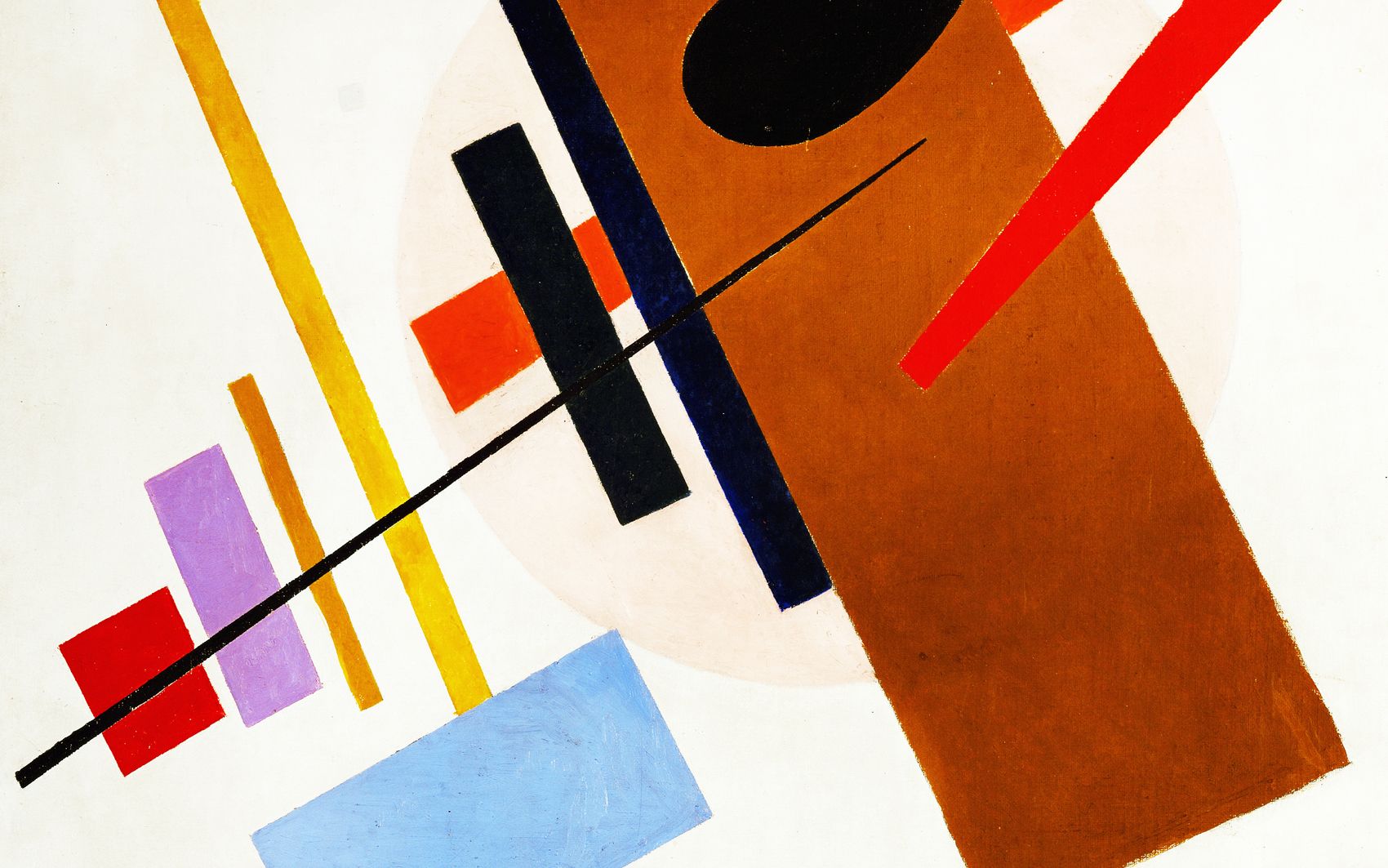
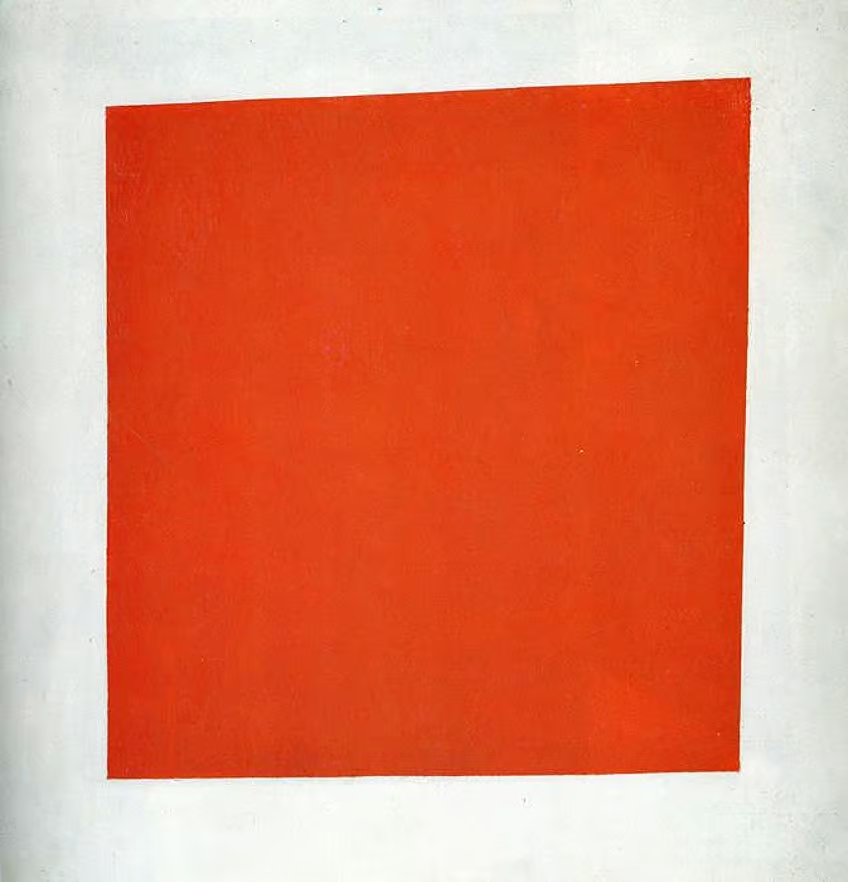
Kompozycja Suprematyczna is one of Kazimir Malevich’s most celebrated works, exemplifying the principles of Suprematism. The painting features a dynamic arrangement of kształty geometryczne—rectangles, squares, and lines—in vibrant primary colors like red, blue, and yellow, along with black and white. These forms are positioned against a neutral background, emphasizing movement and energy through asymmetrical balance. This composition reflects Malevich's focus on sztuka nieobiektywna, stripping away representation to evoke pure emotion and universal truths. The intersecting shapes and colors suggest a sense of motion and depth, making the work both visually striking and conceptually profound.
Significance: Kompozycja Suprematyczna reprezentuje dojrzewanie filozofii artystycznej Malewicza, przesuwając Suprematyzm poza statyczną prostotę Czarny kwadrat w dynamiczną abstrakcję. Wpłynął na rozwój późniejszych ruchów, takich jak konstruktywizm i Bauhaus, pokazując, jak geometria i abstrakcja mogą przekazywać głębokie idee emocjonalne i filozoficzne.
.jpeg)
Biały na białym autorstwa Kazimierza Malewicza (1918)
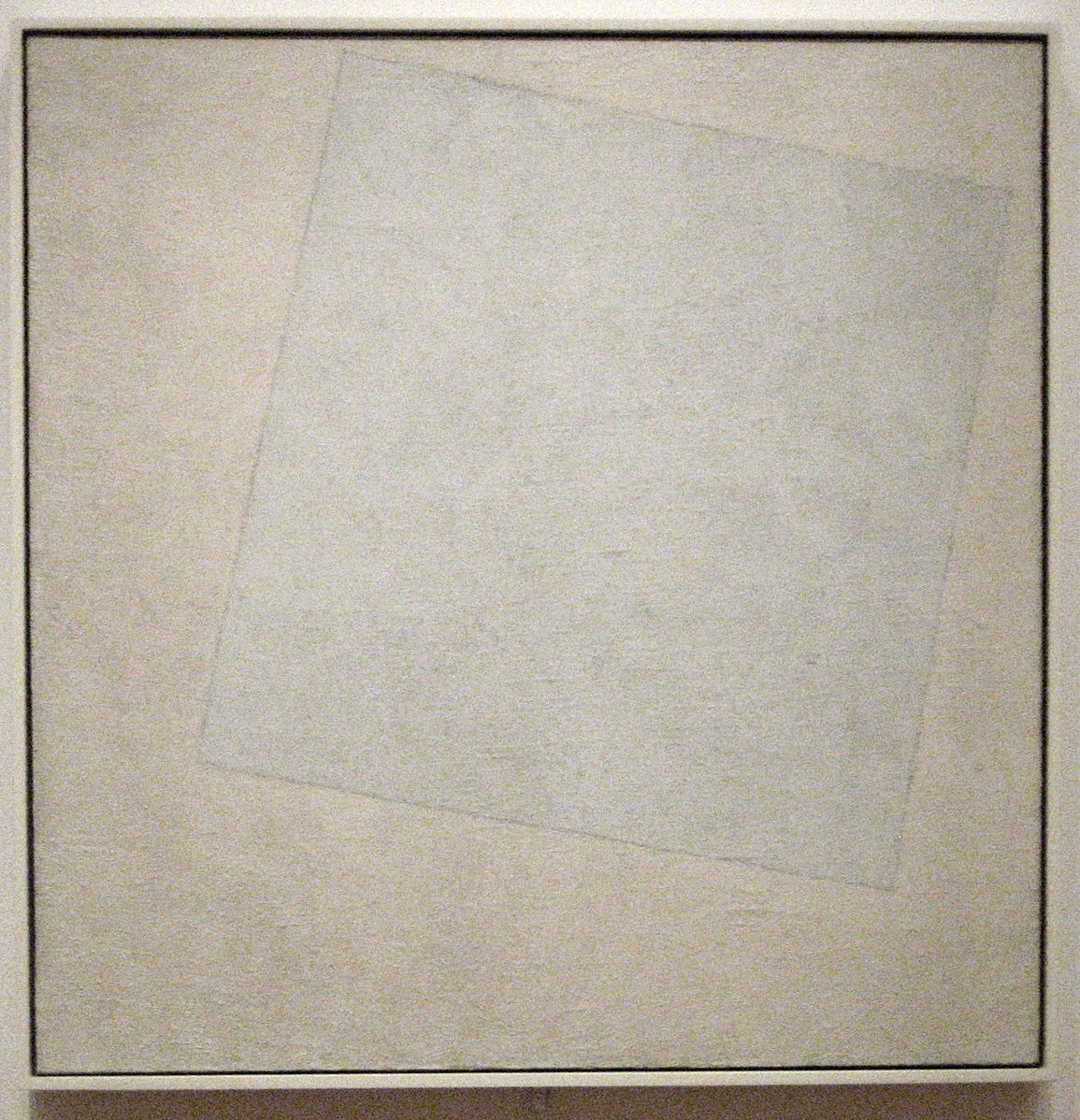
Biały na białym is a minimalist masterpiece by Kazimir Malevich that embodies the spiritual essence of Suprematism. The painting features a slightly tilted white square placed against a larger white background. Subtle tonal differences between the square and the background create a faint, almost imperceptible boundary, emphasizing the eteryczna jakość of the work. This piece marks the culmination of Malevich’s exploration of non-objective art, reducing form and color to their purest states. The use of white symbolizes infinity, emptiness, and a przekraczająca duchowa sfera, wykraczając poza świat materialny. Malewicz postrzegał to jako ostateczną ekspresję wolności i artystycznej czystości.
Significance: Biały na białym exemplifies Malevich's belief that art should transcend physical reality to evoke universal emotional and spiritual truths. The painting’s radical simplicity influenced future movements like Minimalism, highlighting the power of reduction in artistic expression. It remains one of the most significant works of 20th-century abstraction.
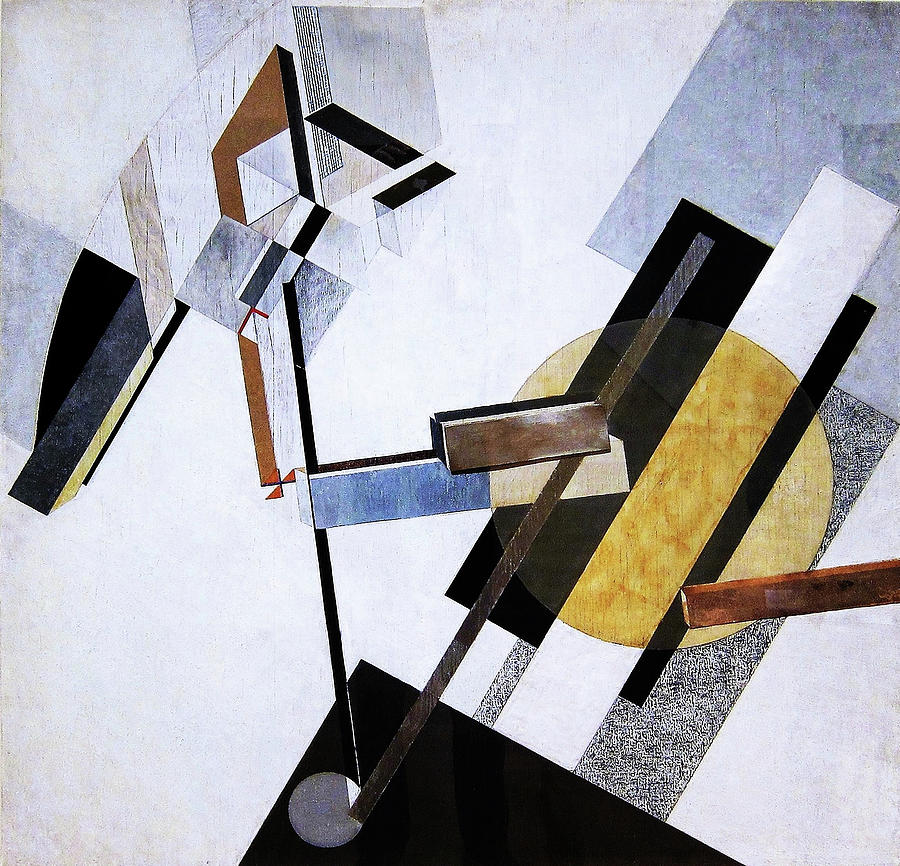
Proun 19D autorstwa El Lissitzky'ego
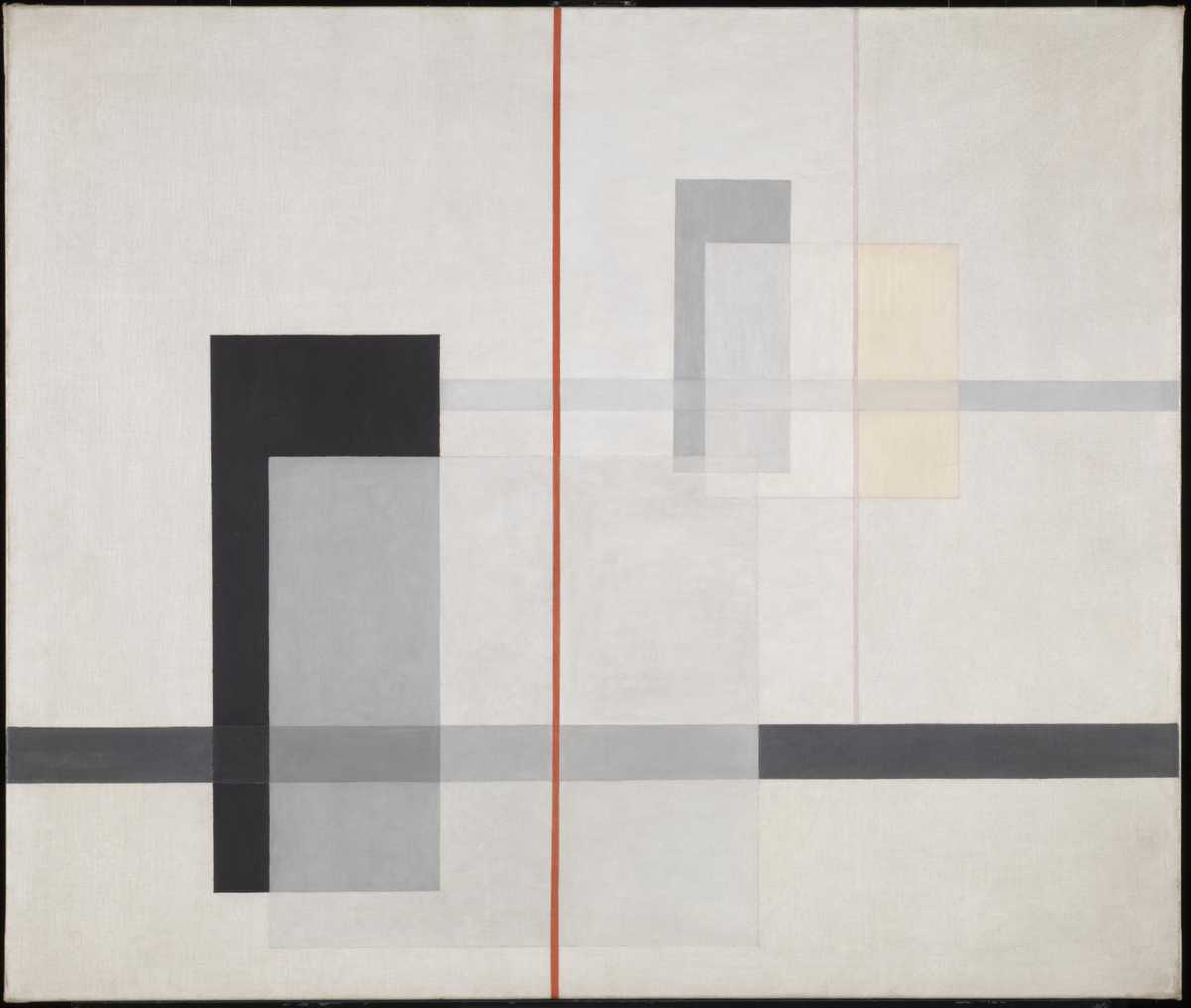
Proun 19D is a pivotal work by El Lissitzky, blending the principles of Suprematism with his innovative exploration of three-dimensional space. The term "Proun" (short for "Project for the Affirmation of the New") represents Lissitzky’s attempt to transition from flat, two-dimensional art into dynamic spatial constructions. The composition features overlapping kształty geometryczne, takich jak prostokąty, koła i linie, ułożone w asymetryczne, lecz harmonijne konfiguracje. Odważne użycie kolorów podstawowych, black, white, and shades of gray reflects a Suprematist influence, while its spatial depth hints at architectural design. Lissitzky envisioned Proun 19D as part of a larger project to integrate art, architecture, and design into a unified modernist vision.
Significance: Ten element ucieleśnia most między Suprematyzmem a konstruktywizmem, gdzie artystyczna abstrakcja spotyka praktyczną funkcjonalność. Wpłynął na nowoczesną architekturę, projektowanie graficzne i planowanie przestrzenne, czyniąc Proun 19D a key work in 20th-century art and design history.
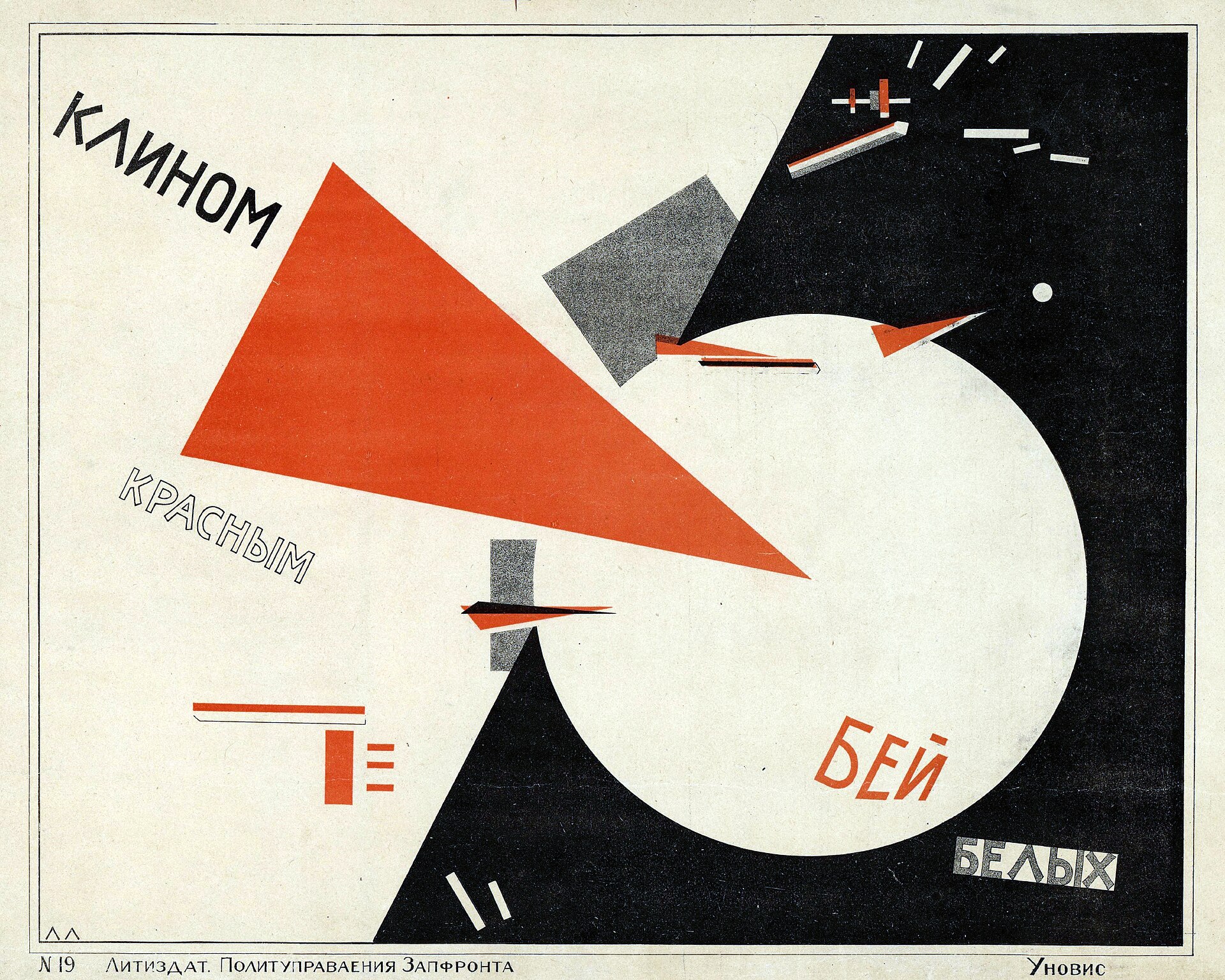
Uderz Białych Czerwoną Kliną autorstwa El Lissitzky'ego (1919)
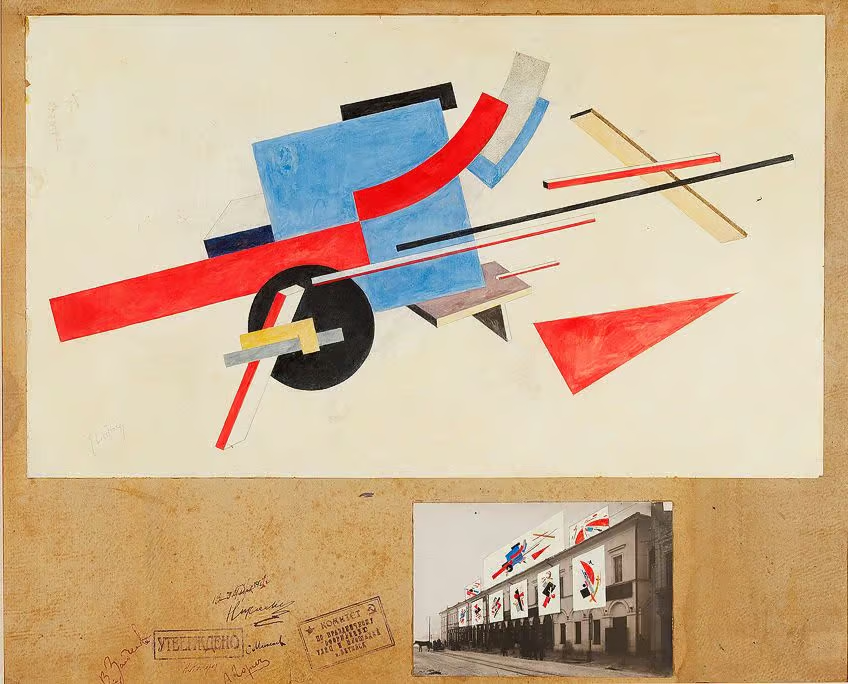
Uderz Białych Czerwoną Kliną is a politically charged propaganda poster by El Lissitzky, created during the Russian Civil War. The artwork uses Geometria suprematyczna to convey its message: a bold red triangle (representing the Bolsheviks) penetrates a white circle (symbolizing the anti-revolutionary White Army). The sharp angles and dynamic composition create a sense of ruch i konflikt, visually reflecting the Bolshevik struggle for victory. The color scheme—red, black, and white—emphasizes contrast and clarity, making the message both visually striking and immediately comprehensible. This work merges Suprematist abstraction with practical, revolutionary intent, showcasing Lissitzky’s ability to adapt artistic principles for political purposes.
Significance:
This poster is a defining example of how Suprematist aesthetics were employed in graphic design and propaganda. It bridges the gap between art and utilitarian function, influencing later movements like Constructivism and modern graphic design. The work is not only a visual masterpiece but also a historical artifact, capturing the revolutionary spirit of its time.
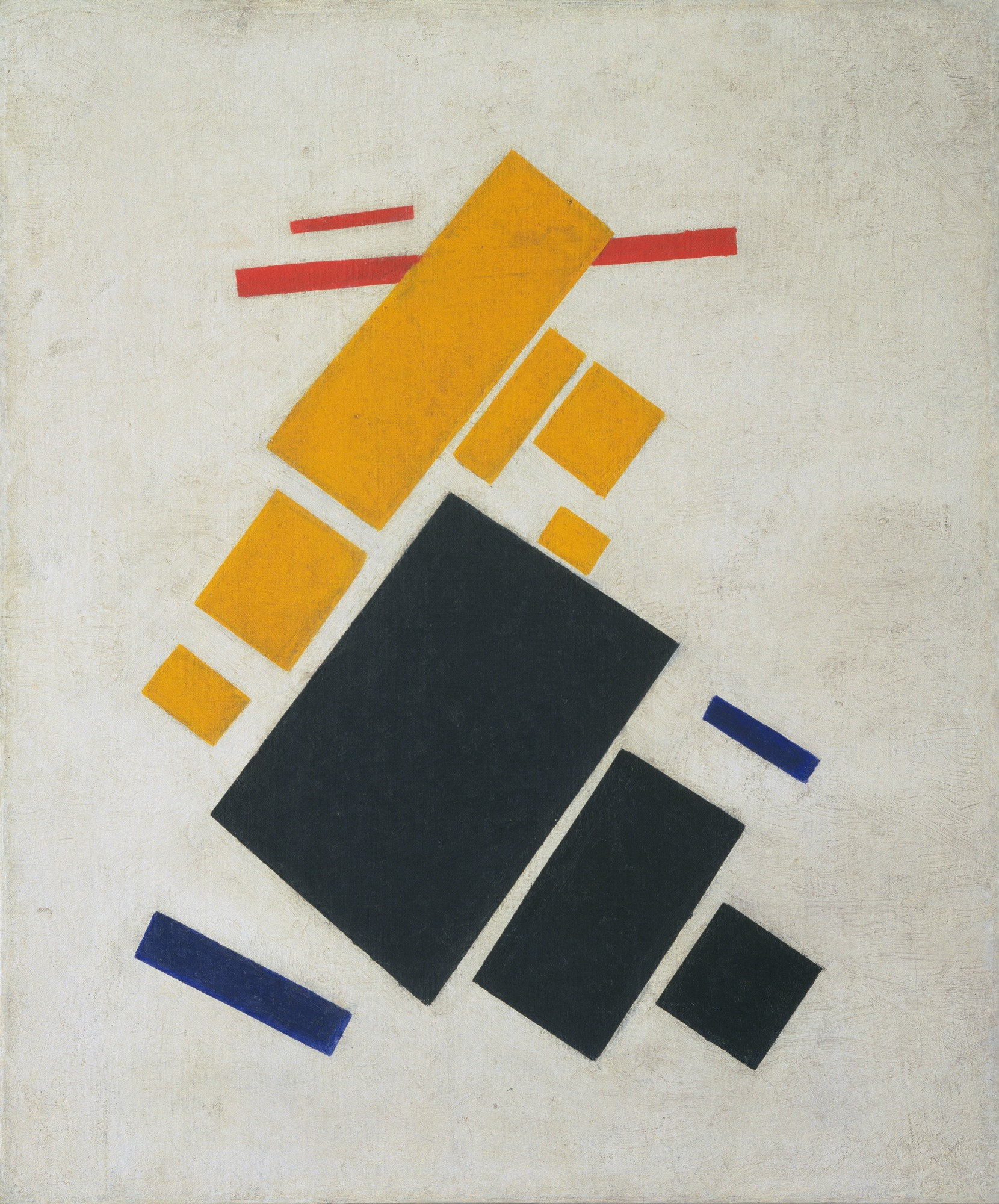
Kompozycja suprematyzmu: Latający samolot autorstwa Kazimierza Malewicza (1915)
Kompozycja suprematyzmu: Latający samolot is a striking example of Kazimir Malevich’s Suprematist philosophy, characterized by an abstract arrangement of kształty geometryczne in dynamic, diagonal configurations. The artwork features rectangles, lines, and squares in bold colors such as red, blue, yellow, and black, set against a white background. These overlapping shapes create a sense of movement, symbolizing the energy and progress of modernity, as well as the sensation of flight. Malevich’s work is free from representation, focusing instead on the przewaga emocji artystycznych oraz uniwersalnej abstrakcji. Ten obraz ucieleśnia jego wizję sztuki wykraczającej poza materialną rzeczywistość, przekazując duchowe i emocjonalne prawdy poprzez czyste formy.
Significance:
This composition represents Malevich’s efforts to merge abstract art with the technological innovations of his time, capturing the spirit of aviation and modern progress. Its influence extended into architecture, design, and later art movements like Constructivism and Bauhaus, affirming Suprematism’s role in reshaping 20th-century art.
Upadek i dziedzictwo
Wyzwania kontekstu historycznego
Suprematism began to decline in the early 1920s, largely due to the shifting political and cultural climate in post-revolutionary Russia. The Bolshevik regime, initially supportive of avant-garde experimentation, increasingly demanded art that served ideological and propagandistic purposes. Suprematism, with its emphasis on pure abstraction and spiritual transcendence, was deemed incompatible with the utilitarian needs of Socialist Realism. As state-sponsored art turned toward representing the working class and revolutionary ideals, artists like Kazimierz Malewicz found their work marginalized. Suprematism's detachment from materialism made it a target for criticism in a society prioritizing practical and ideological goals.
Transformacja Suprematyzmu
Although the movement waned as a formal practice, its principles found new life in related movements like Constructivism and design Bauhaus, where its emphasis on geometry and abstraction became foundational. Suprematism’s aesthetic innovations influenced architectural design, particularly through Malevich’s own explorations into "architectons," abstract models that envisioned new forms of living spaces. While Malevich's artistic production was stifled by the state, his ideas continued to resonate internationally, inspiring modernist architects and designers who sought to integrate abstraction into functional art and design.
Mimo swojego upadku, Suprematyzm pozostawił trwały ślad w historii sztuki nowoczesnej. Był pionierem geometrycznej abstrakcji i wpłynął na kluczowe ruchy XX wieku, takie jak De Stijl, Constructivism, i Bauhaus, które przyjęły jego zasady upraszczania i przejrzystości. Ruch ten położył także podwaliny pod Minimalizm i Ekspresjonizm Abstrakcyjny, inspirując artystów takich jak Piet Mondrian i Mark Rothko.
Nacisk Suprematyzmu na duchowa transcendencja and non-representational art continues to resonate in contemporary art and design. Its exploration of universal forms and the siłę redukcji remains relevant in fields ranging from painting to architecture and graphic design. As Malevich stated, "The new realism in painting is to create new forms that have nothing in common with reality." Suprematism’s bold vision has ensured its place as a cornerstone of modern abstraction, influencing generations of artists and thinkers globally.
Dziedzictwo tego ruchu jest celebrowane w najważniejszych instytucjach sztuki na całym świecie, a jego dzieła, takie jak Czarny kwadrat and Biały na białym, remain iconic representations of its revolutionary approach to art. Suprematism persists as a symbol of innovation, spiritual exploration, and the quest for pure artistic expression.
Conclusion - Suprematism remains a cornerstone of modern abstraction, revolutionizing art through its focus on geometric forms and spiritual transcendence. By rejecting representational imagery, it opened new pathways for artists to explore pure emotion and universal truths. Though it declined under political pressures, its influence persists in movements like Minimalism and Abstract Expressionism, inspiring countless creators across disciplines. Suprematism’s legacy is a testament to the power of simplicity and innovation, proving that abstraction can convey profound meaning beyond the material world.
Przykłady wizualne
Jaka jest centralna idea Suprematyzmu?

Suprematism emphasizes pure abstraction through basic geometric shapes like squares, circles, and rectangles. The movement prioritizes spirituality and emotion, rejecting representational forms to express the supremacy of artistic feeling. It aims to transcend materialism and explore non-objective reality.
Jak Suprematyzm wpłynął na sztukę nowoczesną?
Suprematism inspired modern art by pioneering pure geometric abstraction. It influenced movements like Constructivism and De Stijl, encouraging artists to explore minimal forms and non-representational art. Its legacy shaped the foundations of 20th-century abstract art and remains influential in contemporary design.
Dlaczego Kazimir Malevich jest ważny w Suprematyzmie?
Kazimir Malevich, founder of Suprematism, revolutionized modern art with works like "Black Square", a defining piece of abstraction. His focus on geometry, color, and emotion marked a turning point in art history, challenging representation and influencing countless artists to explore non-representational styles.

Simona Niță
Copywritter
A passionate storyteller who loves turning ideas into words. When not writing, you’ll find me exploring, listening to music, or daydreaming about the next adventure.
.webp)