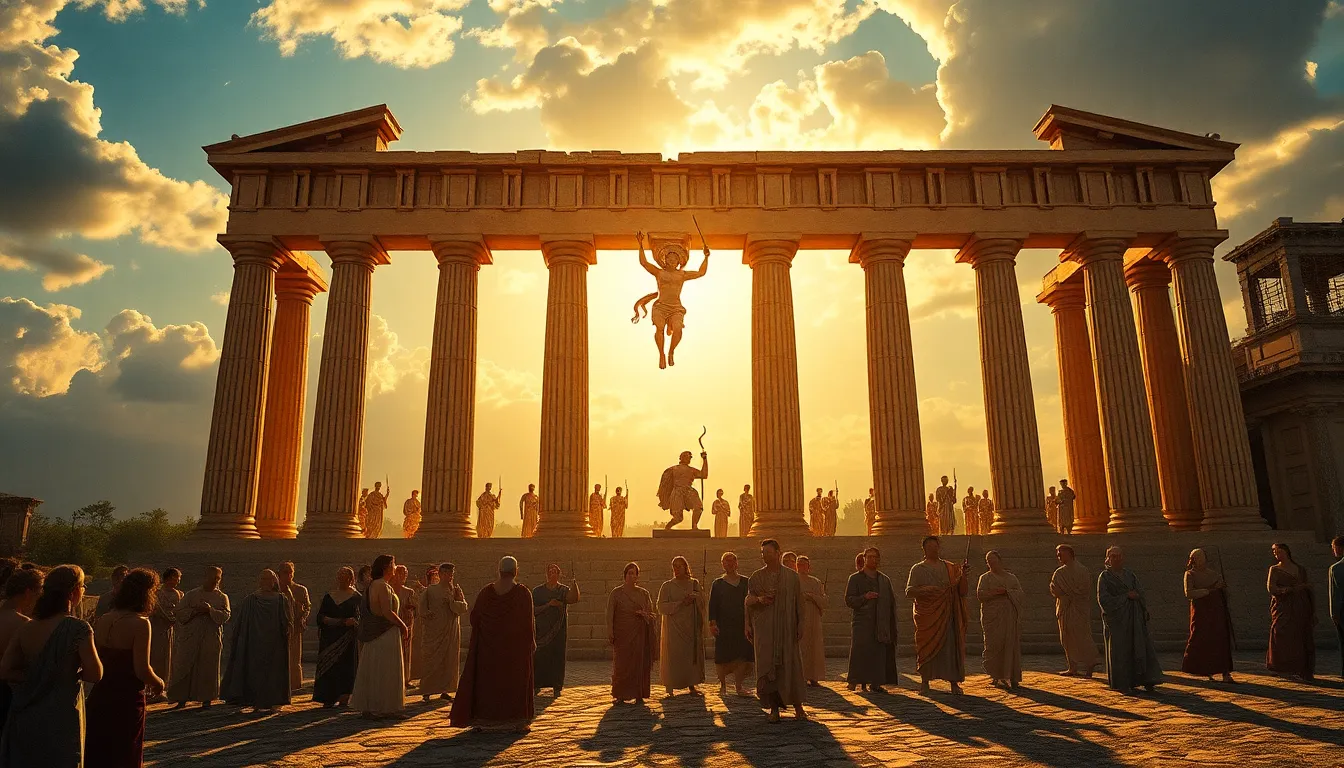
Oltre al suo innegabile fascino estetico, l'arte greca funge da lente sui valori, le credenze e le aspirazioni di una civiltà che ha plasmato profondamente il pensiero e la cultura occidentali. Dai templi monumentali alla delicata ceramica, fino alle sculture realistiche, l'arte della Grecia antica rappresenta una testimonianza duratura della ricerca umana di bellezza, significato e innovazione.
This artistic tradition celebrated both the divine and the human, portraying gods, heroes, and everyday life with a blend of naturalism and idealism. Philosophical concepts like balance and order guided their creations, while technical advancements, such as contrapposto in sculpture and the development of the architectural orders, set new standards. The legacy of Ancient Greek art extends beyond its historical context, profoundly shaping Renaissance ideals and modern aesthetics.
Origini ed evoluzione
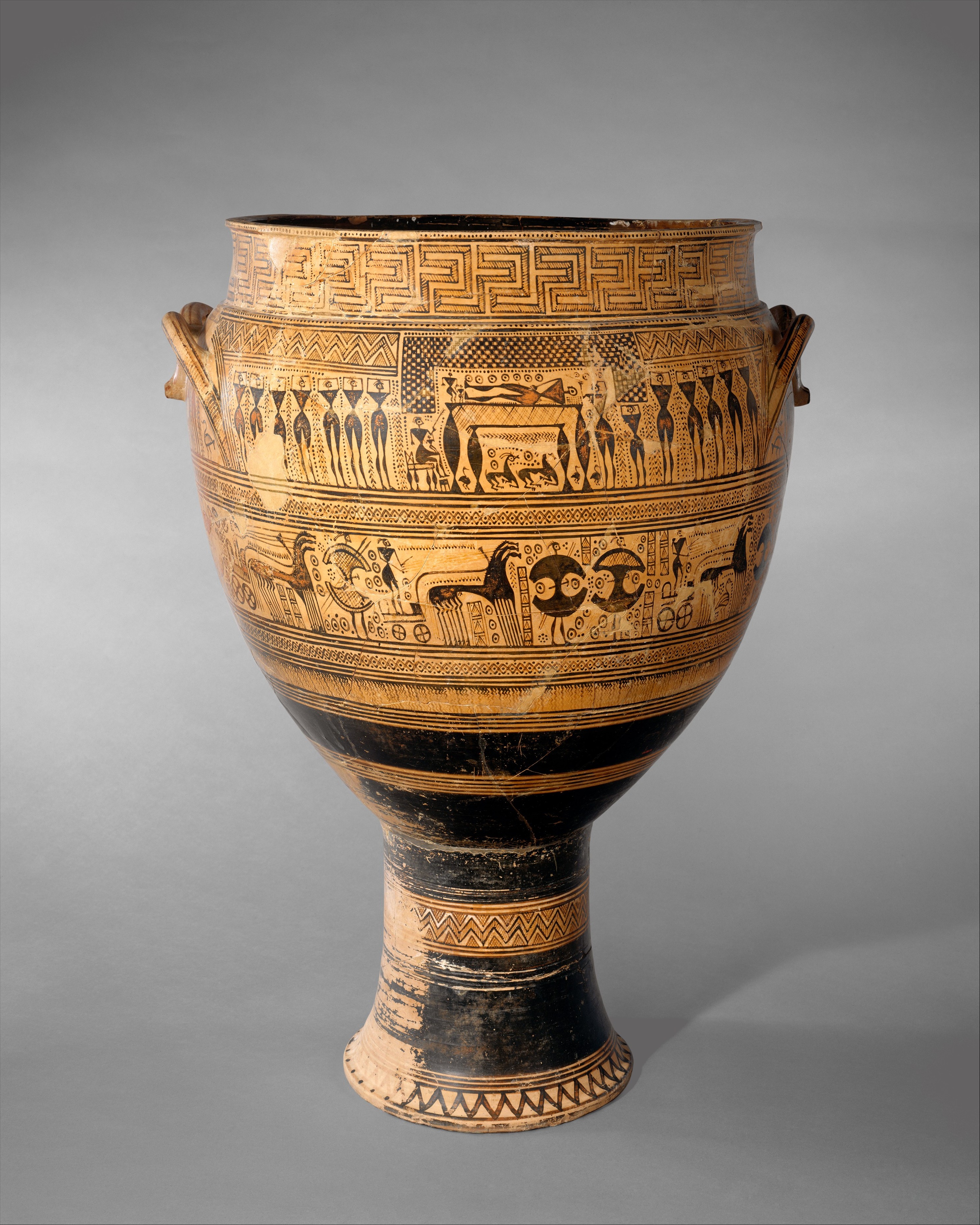
The origins of Ancient Greek art can be traced to the Geometric Period (circa 1100–700 BCE), where simple shapes and patterns defined early pottery and figurines. The Archaic Period (circa 700–480 BCE) saw a shift toward naturalism, exemplified in sculptures like kouroi and korai, which celebrated youth and symmetry. The Classical Period (480–323 BCE) is renowned for its emphasis on idealized forms, as seen in works such as the Parthenon. Finally, the Hellenistic Period (323–31 BCE) introduced emotional depth, drama, and dynamic movement to Greek art.
Le Fondamenta Geometriche e Arcaiche
The Geometric period marked the rebirth of art after the Greek Dark Ages, focusing on abstract motifs and structured patterns in pottery. This era also introduced small-scale sculptures with stylized human and animal forms, embodying early attempts at representation. As it transitioned into the Archaic period, monumental sculptures began to emerge, showcasing more naturalistic forms and proportions. "Archaic smiles" characterized early statues, hinting at lifelike expressions and vitality, representing optimism and divinity. Advances in pottery, such as the black-figure technique, provided intricate storytelling in visual form, further bridging the gap between art and daily life.
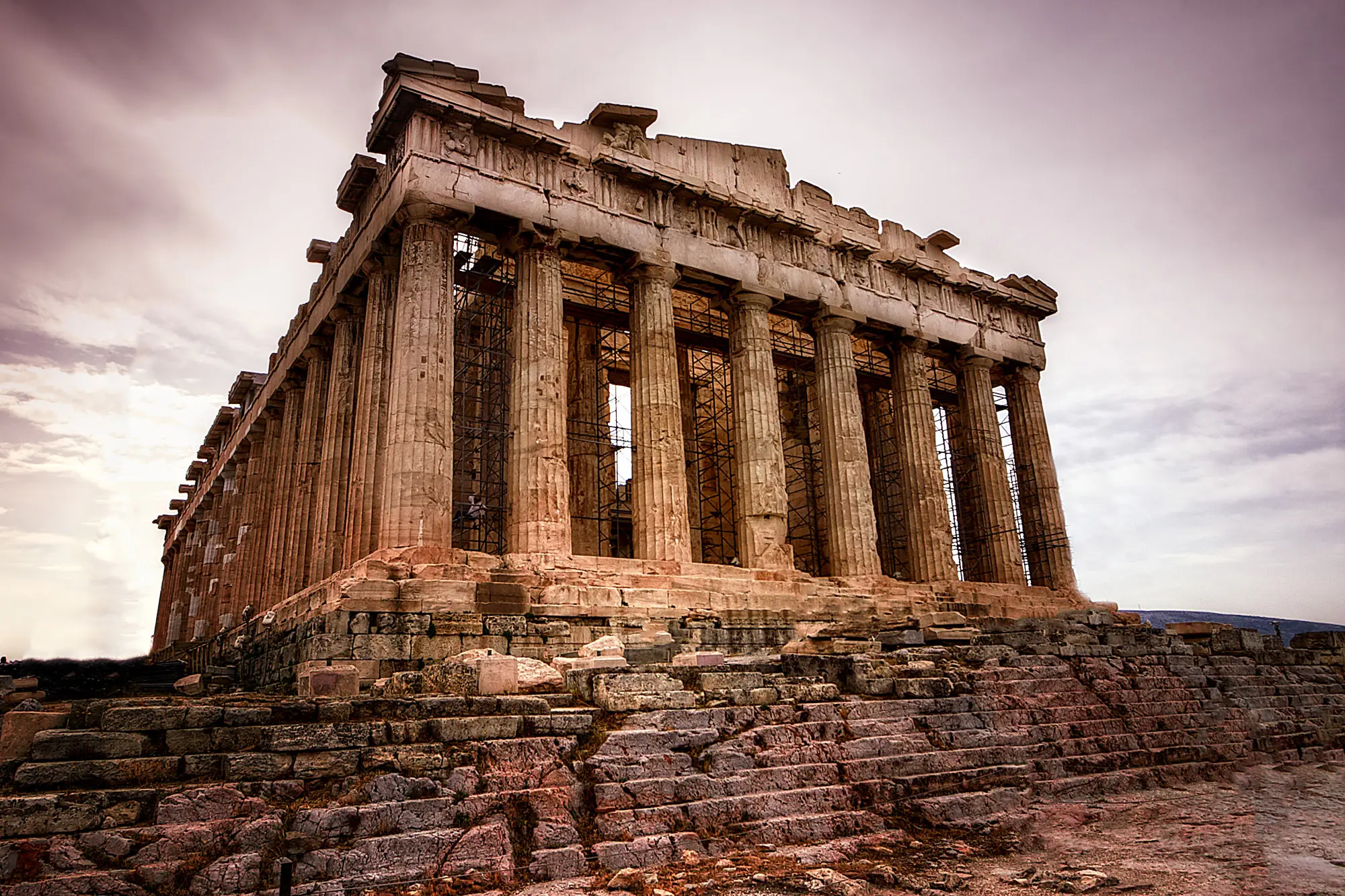
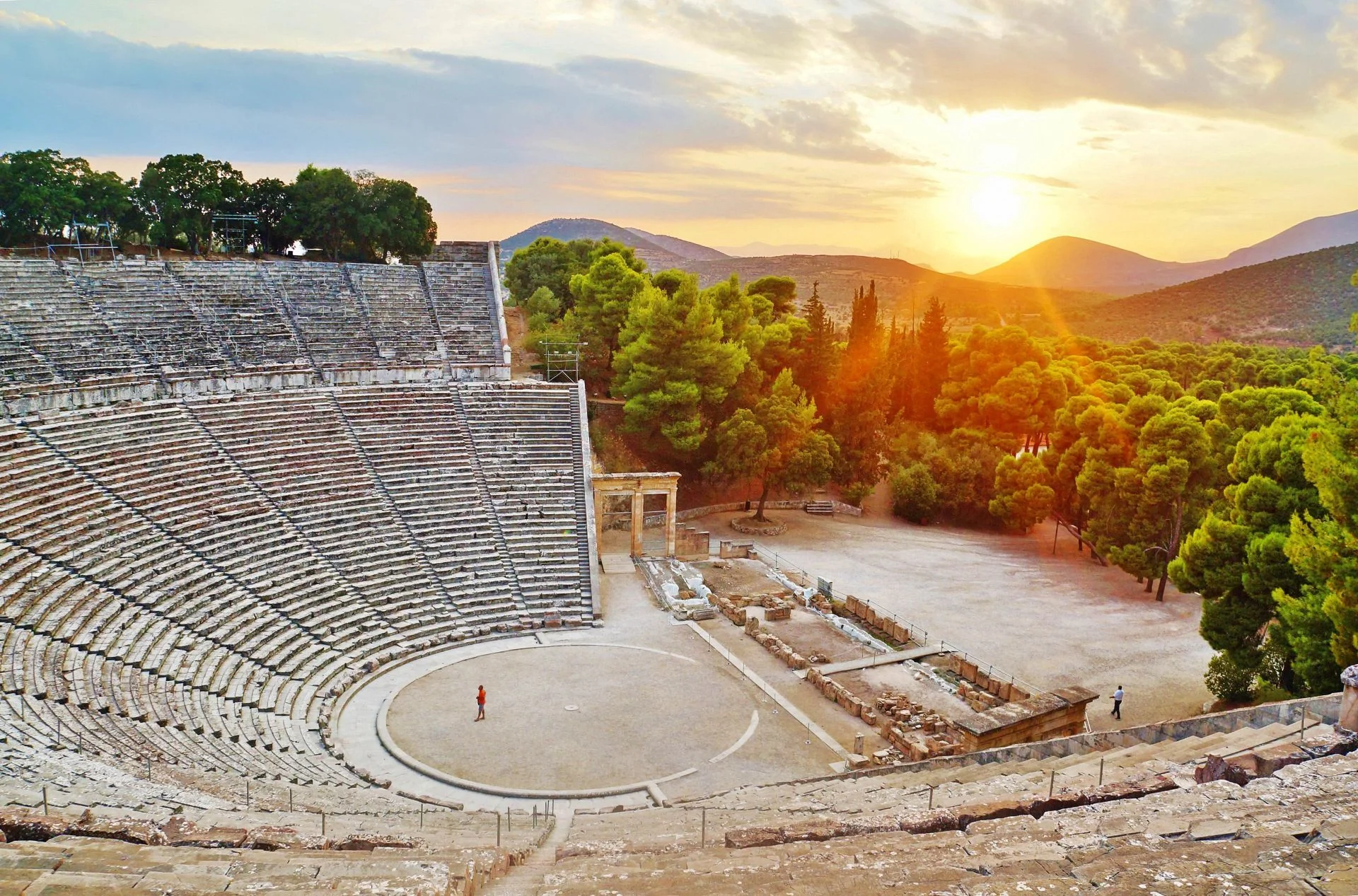
The Classical era epitomized balance and perfection in art, symbolizing the height of Greek creativity and intellectual refinement. Sculptors like Phidias and Polykleitos revolutionized sculpture with idealized forms that adhered to mathematical principles, such as Polykleitos' canon of proportions. Architects perfected the Doric, Ionic, and Corinthian orders, designing timeless structures like the Parthenon that harmonized grandeur with simplicity. This period also saw innovations in drama and performance art, as theaters were designed to amplify sound and enhance communal experiences. The integration of naturalistic poses and emotional depth in sculptures made this era an enduring symbol of Greek artistic excellence.
Il Dramma Ellenistico
L'arte ellenistica si immerse nel realismo e nell'espressione emotiva, superando l'idealismo per esplorare le complessità dell'esperienza umana. Sculture come il Gruppo Laocoonte esemplificano l'attenzione del periodo al movimento, alla lotta e al dramma, riflettendo emozioni intense e narrazioni vivide. Questo periodo ampliò anche l'influenza geografica e culturale dell'arte greca, incorporando elementi delle regioni conquistate come la Persia e l'Egitto.
"Tutti gli uomini per natura desiderano conoscere." – Aristotele
Artists focused on capturing individual character and physical imperfections, such as in depictions of elderly figures and children, emphasizing a broader spectrum of humanity. Architectural marvels like the Great Altar of Pergamon symbolized the grandeur and ambition of this era, merging narrative reliefs with monumental design.

Concetto estetico
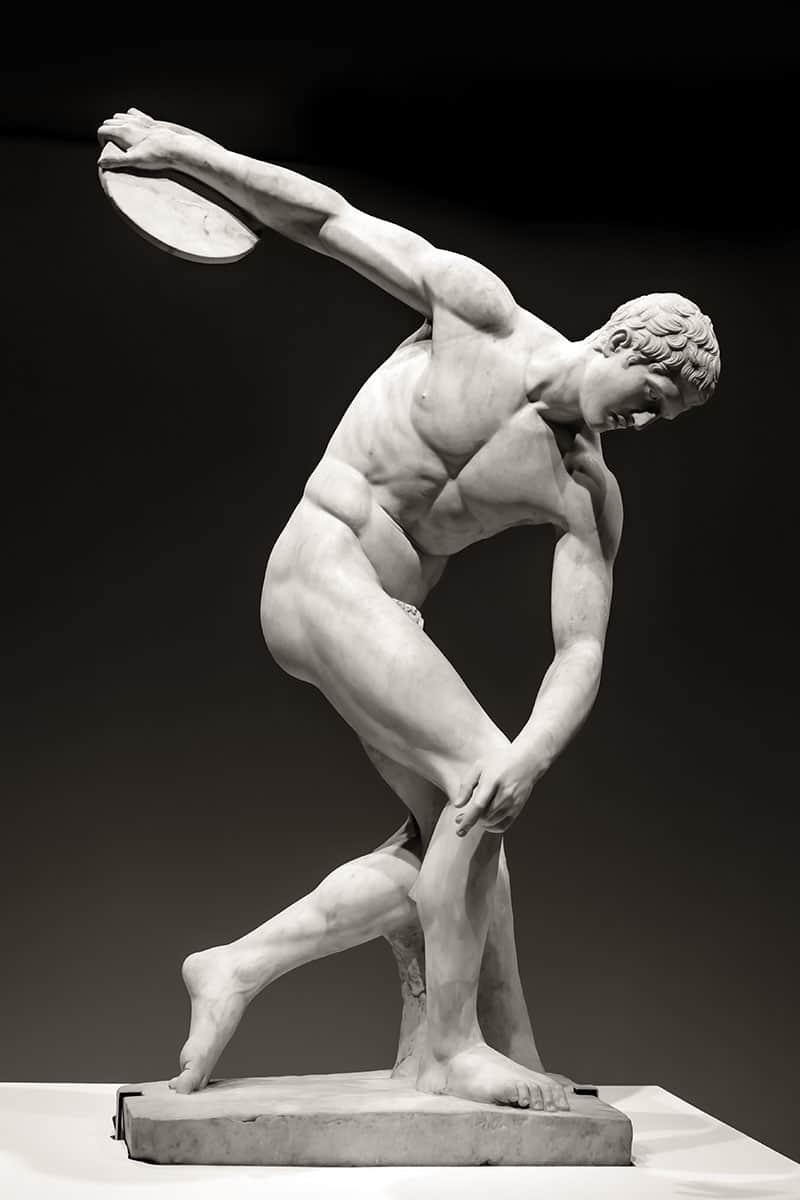
Greek art's aesthetics were rooted in proportion, harmony, and a pursuit of ideal beauty. Inspired by mathematics and philosophy, the Greeks believed in creating art that mirrored the cosmos's order. For example, the "Golden Ratio" influenced both architecture and sculpture. Greek art celebrated the human body, focusing on anatomical precision and movement, as seen in Discobolus by Myron.
Perfezione Proporzionale
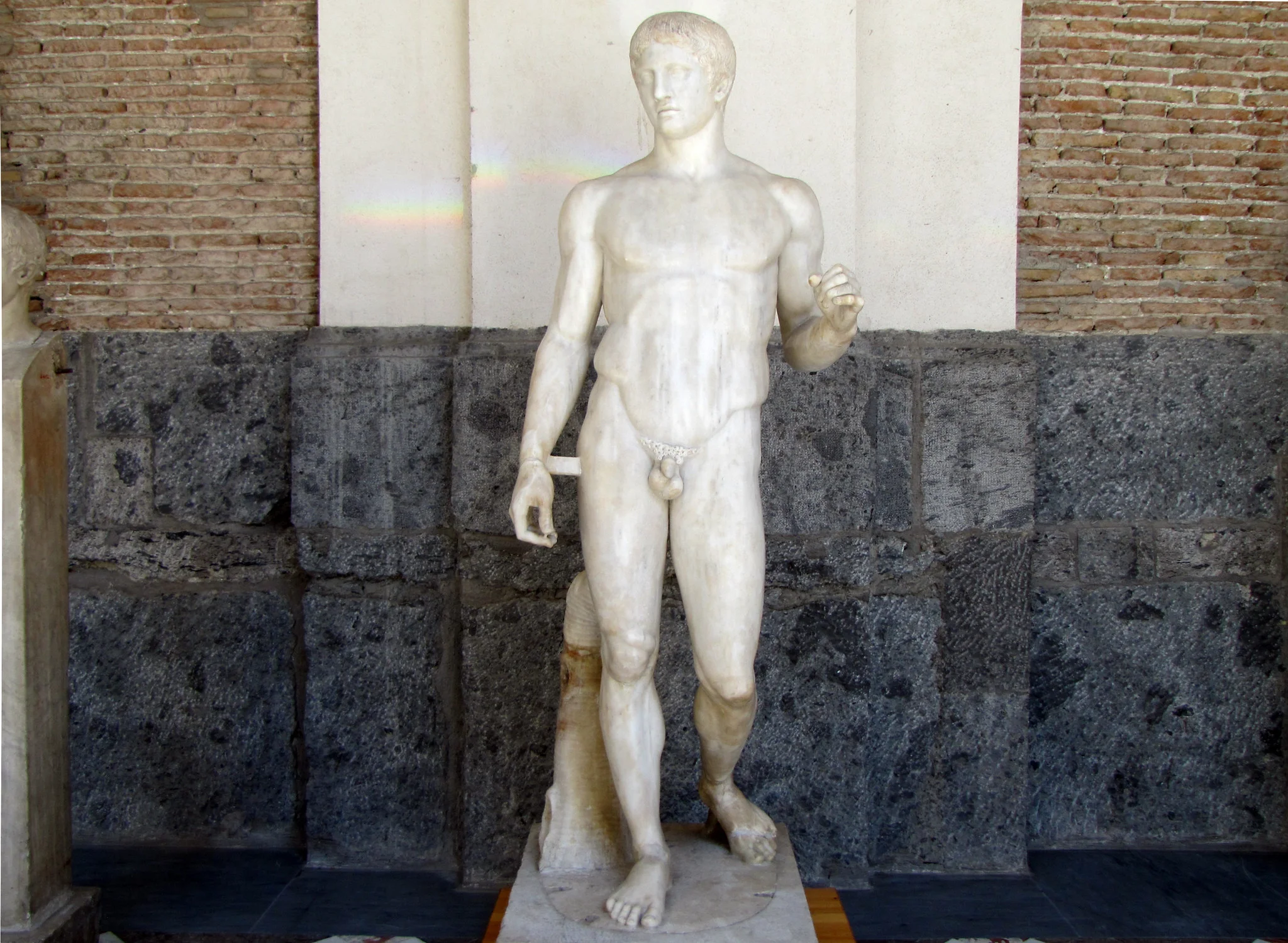
The Greeks introduced mathematical principles into their art, aiming for perfection and harmony that reflected their philosophical ideals. Columns of temples were meticulously designed with optical refinements, such as entasis, where the columns bulge slightly in the middle to appear straight from a distance. These innovations were not limited to architecture; they extended to sculpture, where proportions were calculated to achieve balance and beauty. Polykleitos’ Doryphoros (Portatore della Lancia) esemplifica questo approccio, aderendo al suo "canon" di proporzioni corporee ideali. L'enfasi sulla geometria e sulla precisione ha reso l'arte greca una fusione di intuizione scientifica ed espressione artistica, influenzando innumerevoli generazioni.
Realismo Espressivo
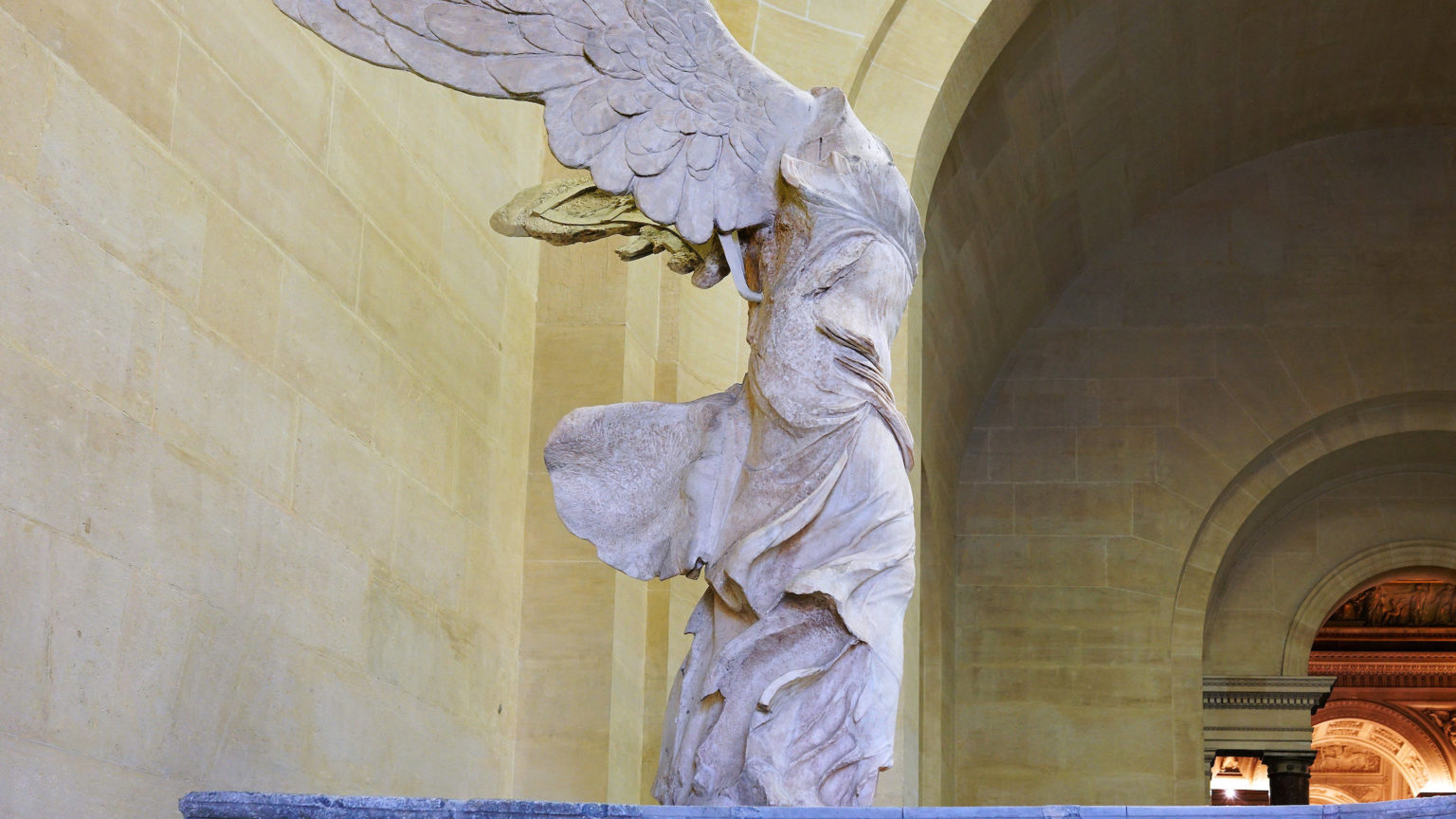
Le opere ellenistiche segnarono un significativo spostamento verso il realismo, catturando la profondità dell'esperienza umana attraverso dettagli intricati e forme dinamiche. Sculture come Nike of Samothrace epitomized this movement, with flowing drapery and a sense of motion that conveyed life and energy. Artists also focused on depicting a wide range of emotions and subjects, from the anguish in the Laocoön Group to the humor found in everyday scenes. This period celebrated individuality and the imperfections of the human condition, breaking away from the idealized restraint of the Classical era. Hellenistic realism laid the groundwork for narrative depth in Western art traditions.
Temi e motivi
Greek art often depicted mythological narratives, gods, heroes, and scenes from everyday life, serving as both artistic expressions and cultural reflections. Mythological themes were central, highlighting the exploits of gods like Zeus and Athena or heroes such as Heracles and Achilles. These stories symbolized human virtues, flaws, and the eternal struggle between order and chaos. Iconic pottery illustrated these themes, often used in domestic and ceremonial settings, emphasizing their importance in Greek identity. Athletic events were also a recurring motif, celebrating physical excellence and the Olympic spirit. This combination of myth, life, and culture gave Greek art a timeless relevance.
Mito e Mortalità
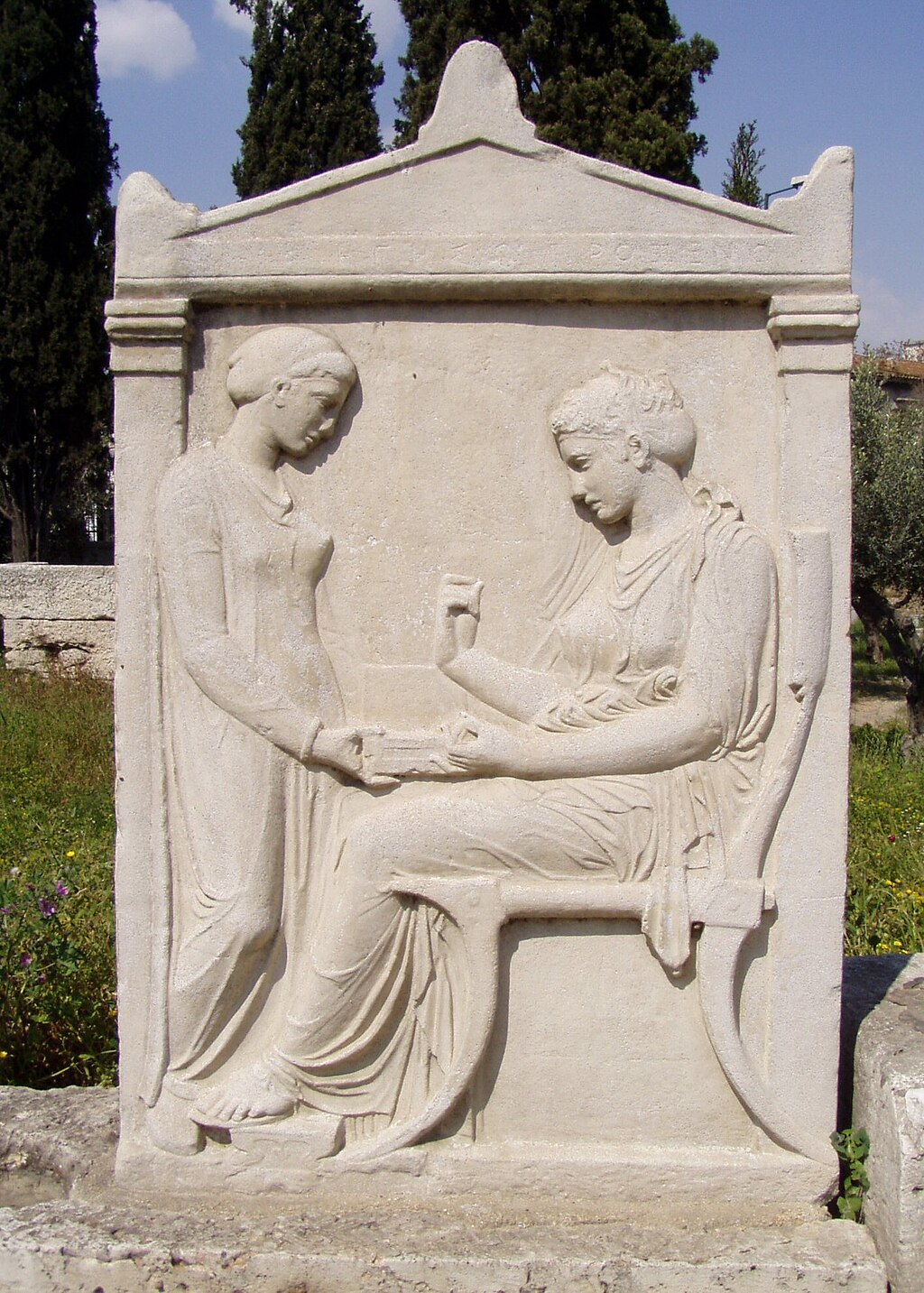
Greek temples housed statues of deities, emphasizing the divine connection between humans and gods, while funerary art captured the essence of mortality and remembrance. Monumental tombs and stele often depicted scenes of the deceased in idealized forms, reflecting the Greek belief in honoring life beyond death. Vase paintings portrayed mythological battles, such as the Trojan War, symbolizing eternal struggles and the triumph of virtue over adversity. These works were not only decorative but also carried deep philosophical and spiritual meanings. The balance between life and death in Greek art provided a profound commentary on human existence and its fleeting nature.
Orgoglio Civico e Atletico
Public sculptures celebrated civic achievements, showcasing the unity and strength of Greek city-states. Monuments like the Tyrannicides commemorated pivotal historical events, while statues in public spaces reflected ideals of governance and democracy. Athletic pride was immortalized in sculptures such as Polykleitos’ Discobolus and in detailed depictions on pottery, showcasing athletes in action. These artworks reflected the Greek emphasis on physical excellence and competition as integral to personal and communal identity. By highlighting the achievements of individuals and society, Greek art reinforced values of strength, honor, and unity, leaving an enduring legacy of civic and athletic pride.
Impatto e Influenza
Ancient Greek art’s impact and influence extend far beyond its historical context, shaping the foundation of Western artistic and cultural traditions. The Greeks introduced groundbreaking techniques and aesthetic principles, such as naturalism, proportion, and harmony, which have been revered and emulated for centuries. Their focus on celebrating human potential and the divine through art transformed the way civilizations perceived and expressed creativity. From the Renaissance revival of classical ideals to the integration of Greek architectural styles in modern buildings, the legacy of Greek art remains deeply embedded in global culture. Its reach transcends visual art, influencing philosophy, theater, and public life, leaving a profound and enduring mark on the world.
Impatto sull'Arte e Cultura Occidentali
L'arte greca antica ha plasmato profondamente le fondamenta dell'arte occidentale, stabilendo principi di bellezza, equilibrio e armonia che continuano a influenzare le tradizioni artistiche odierne. La sua enfasi sul realismo e sulla proporzione ha introdotto tecniche come contrapposto, which became a standard in sculpture and painting.
"Lo scopo dell'arte è rappresentare non l'aspetto esteriore delle cose, ma il loro significato interiore." – Aristotele
Innovazioni greche come linear perspective e l'uso del Golden Ratio in architecture set benchmarks for artistic and architectural design. These advancements, rediscovered during the Renaissance, inspired masters like Michelangelo and Leonardo da Vinci, who integrated Greek ideals into their work. The Greek reverence for the human form and individuality reshaped how art portrayed the human experience, cementing its impact across centuries.
Influenza Oltre l'Arte
Greek art extended its influence into diverse fields such as philosophy, theater, and government, shaping broader aspects of culture and civilization. The emphasis on public art in Greek society, such as statues in agoras and temples, set a precedent for integrating art into communal spaces, a tradition that persists in modern public monuments and architecture.
"La pittura è poesia silenziosa, e la poesia è pittura che parla." – Simonide di Ceo
The Doric, Ionic, and Corinthian columns, emblematic of Greek architecture, are still widely used in contemporary structures, from government buildings to memorials. Furthermore, the narrative depth found in Greek pottery and sculpture laid the groundwork for storytelling in visual media, inspiring everything from neoclassical art to modern cinema. Ancient Greek art remains a cornerstone of global artistic heritage, reflecting universal themes that transcend time.
_(30776483926).jpeg)
Esempi Rappresentativi
L'Erechtheion (Completato 406 a.C.)
The Erechtheion, located on the Acropolis of Athens, is a masterpiece of Greek architecture, known for its unique design and the iconic Caryatid Porch. This temple, dedicated to Athena and Poseidon, features asymmetrical layouts and sculptural female figures as supportive columns, blending artistic innovation with structural functionality. The intricate detailing of the Caryatids’ drapery and serene expressions exemplifies the Greek mastery of combining beauty with practicality. The Erechtheion represents the height of artistic and architectural sophistication in the late Classical period, showcasing how Greek architects and sculptors integrated mythology, religion, and aesthetics into a harmonious creation.

Il vaso François (ca. 570 a.C.)
The François Vase, realizzato da Kleitias ed Ergotimos, è un krater monumentale a figure nere che funge sia da capolavoro decorativo sia da vaso narrativo. Quest'opera ceramica intricata presenta oltre 200 figure della mitologia greca, incluse scene di dei, eroi e battaglie leggendarie. Le sue composizioni narrative dettagliate dimostrano una maestria eccezionale e l'enfasi greca sulla conservazione delle storie culturali attraverso l'arte. I registri a livelli del vaso raccontano una varietà di racconti, dal matrimonio di Peleo e Teti alle imprese di Teseo, mostrando la diversità della mitologia greca. Il François Vase reflects the importance of mythological themes in Greek pottery and its role as a medium for education, celebration, and artistic excellence, bridging the gap between functional objects and high art.

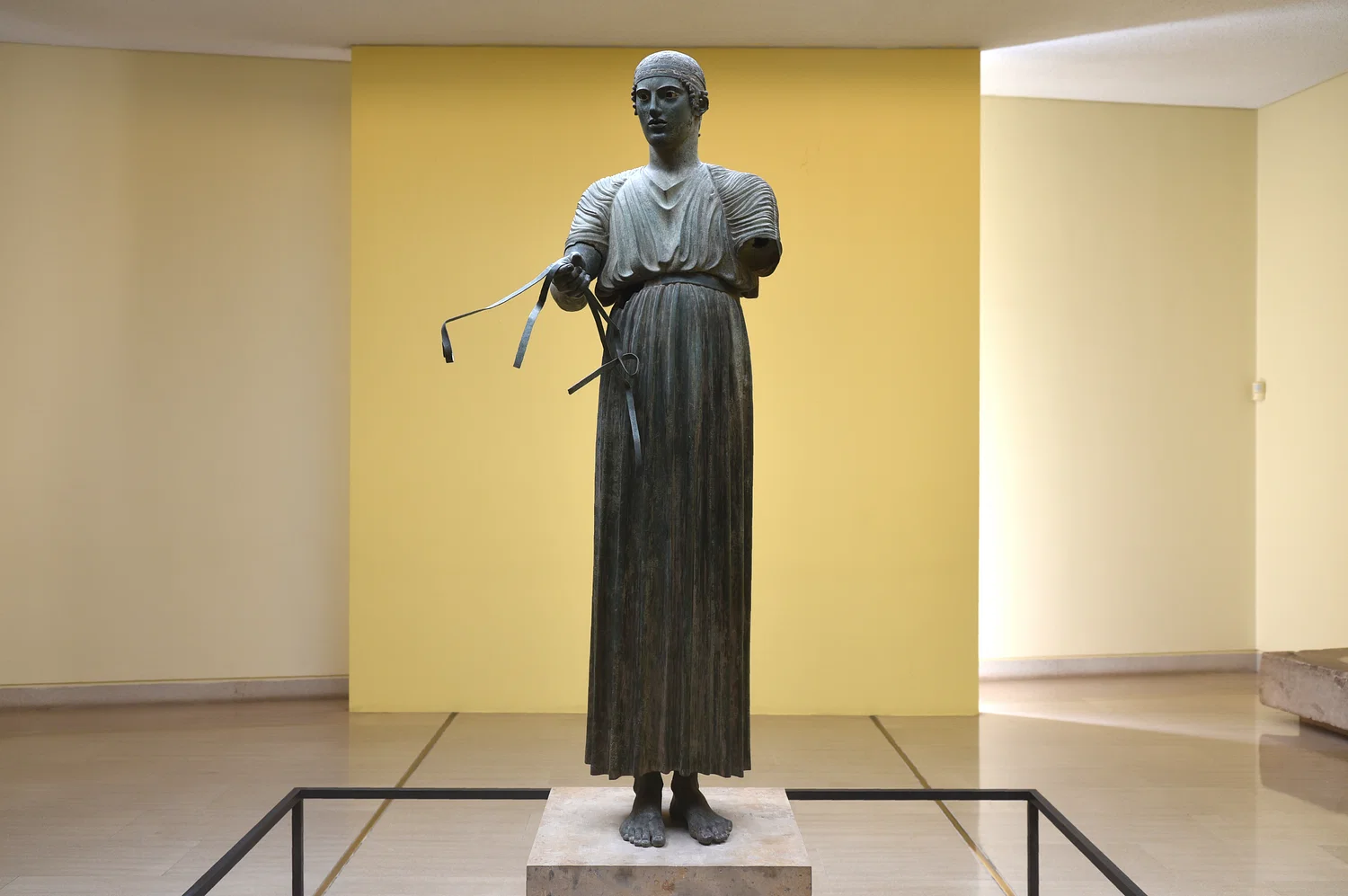
Il Carrozziere di Delfi (ca. 470 a.C.)
The Carrozziere di Delfi, una statua in bronzo che commemora una vittoria in gara di carri, esemplifica l'attenzione del periodo classico precoce al naturalismo e alla compostezza. La statua è notevole per la resa dettagliata dei vestiti del carrozziero e per l'espressione serena, catturando sia realismo sia dignità. Parte di un gruppo più ampio che includeva cavalli e un carro, il Charioteer simboleggia gli ideali greci di eccellenza, autocontrollo e successo competitivo. Gli occhi della statua, intarsiati con vetro e pietra, creano uno sguardo realistico che ne accentua il realismo. Questo pezzo dimostra la sofisticazione delle tecniche greche di fusione del bronzo, con dettagli precisi che enfatizzano sia la postura fisica sia quella emotiva. Rimane un esempio celebrato di come l'arte greca elevasse le imprese atletiche a riflesso dei valori sociali.
Declino e eredità
The decline of Ancient Greek art coincided with the loss of Greek political autonomy as city-states succumbed to foreign domination. This period saw a gradual shift in artistic priorities as the cultural landscape evolved. Economic challenges and wars, including the conquest of Greece by Rome, reduced the resources available for monumental projects, leading to a decline in large-scale artistic innovation. However, Greek artistic traditions were not entirely lost; they were adapted and transformed, finding new expressions within the context of the Roman Empire.
Shifts in Artistic Focus
Man mano che le città-stato greche cadevano sotto il controllo romano, la produzione artistica si orientava sempre più ai gusti e alle esigenze utilitarie dei Romani. L'attenzione si spostò da grandi monumenti pubblici e templi a ville private e design pratici. La ceramica, che un tempo raccontava intricate storie mitologiche, divenne più semplificata e funzionale. Gli artisti greci, che in precedenza lavoravano in modo indipendente, venivano spesso commissionati da patroni romani per creare opere che rispecchiassero le loro preferenze. Nonostante questi cambiamenti, molti artisti greci prosperarono sotto il dominio romano, contribuendo con le loro tecniche e estetiche alla cultura romana, assicurando che il loro mestiere evolvesse anziché scomparire.
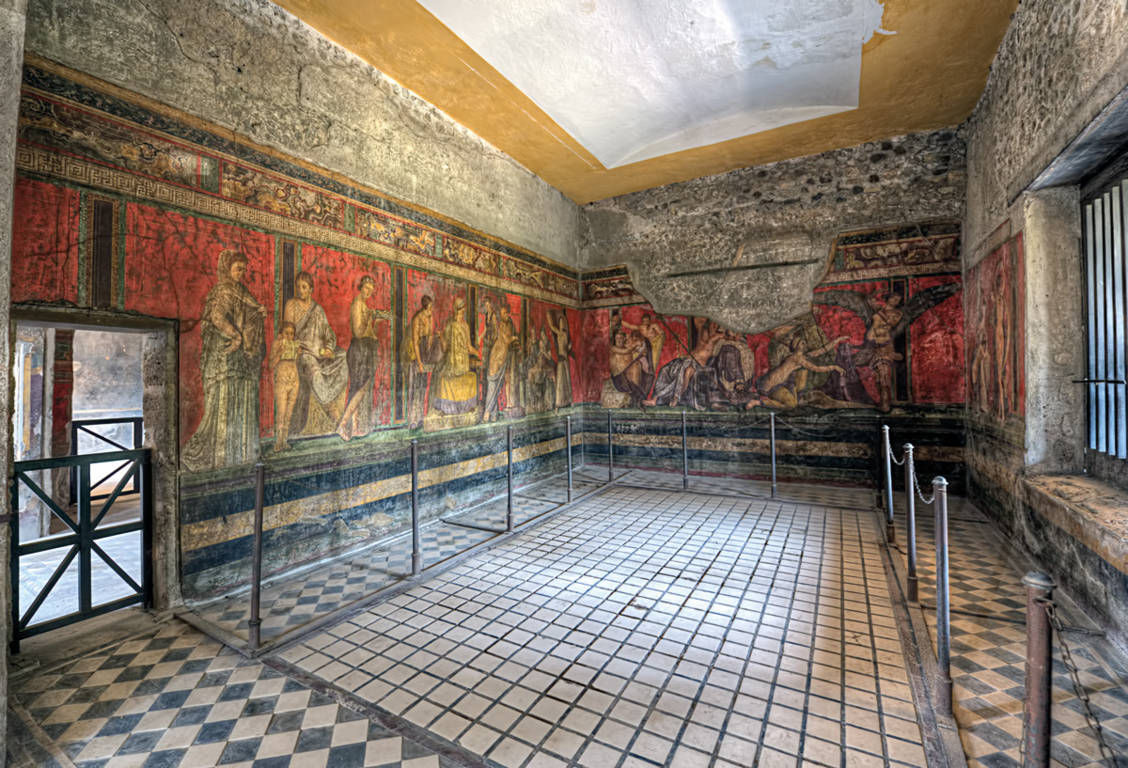
Questa nuova era dell'arte vide anche la fusione di stili greci e romani, creando un'estetica ibrida che enfatizzava grandiosità e accessibilità. Le adattamenti romani delle forme greche, come mosaici e affreschi, iniziarono a incorporare temi locali, rendendo l'arte più vicina a un pubblico più ampio. Sebbene l'innovazione rallentò, questa integrazione garantì la sopravvivenza e la diffusione dei principi artistici greci.
Rinascita culturale e eredità globale
The Renaissance sparked a revival of Greek ideals, emphasizing humanism, balance, and realism in art and architecture. Artists and thinkers rediscovered Greek texts and techniques, integrating them into works that celebrated the human form and intellect. This cultural rebirth cemented Ancient Greece’s role as the cornerstone of Western art.

In modern times, Greek influences extend to urban planning, where the emphasis on symmetry and open spaces reflects classical ideals. The global admiration for Greek art can be seen in public sculptures, architectural designs, and educational curricula that celebrate its innovation. Ancient Greek art remains a beacon of inspiration, reflecting humanity's enduring quest for beauty and meaning.
Conclusione - L'arte greca antica rimane una pietra miliare del patrimonio artistico e culturale, influenzando innumerevoli generazioni in tutto il mondo. La sua maestria nella proporzione, nel realismo e nella narrazione continua a ispirare, plasmando tutto, dai capolavori del Rinascimento all'architettura e al design moderni. Oltre all'estetica, l'arte greca riflette ideali senza tempo di armonia, potenziale umano e ricerca intellettuale, collegando il mondo antico a quello contemporaneo. La sua eredità duratura sottolinea il potere della creatività di trascendere il tempo, connettendo l'umanità attraverso espressioni condivise di bellezza e significato. L'arte greca antica non è semplicemente un reperto del passato, ma una base vibrante per future esplorazioni artistiche e innovazioni culturali.
Esempi visivi

Come rifletteva l'arte greca la loro cultura?

L'arte greca era una profonda riflessione della loro cultura, incarnando valori di bellezza, armonia e orgoglio civico. La mitologia giocava un ruolo centrale, con rappresentazioni di dei, eroi e eventi leggendari che mostrano la loro devozione religiosa e gli ideali morali. Scene di vita quotidiana sulla ceramica riflettevano le strutture sociali e le tradizioni, enfatizzando il raggiungimento umano. Sculture pubbliche e templi erano parte integrante della vita civica, rafforzando l'identità della comunità e l'orgoglio culturale. Queste opere d'arte erano più che decorative—erano un dialogo tra mortale e divino, un'espressione dell'intelletto e una testimonianza della visione sofisticata dei Greci.
Quali materiali usavano i Greci per la loro arte?
Gli artisti greci impiegavano abilmente materiali come marmo, bronzo e terracotta per creare i loro capolavori. Il marmo era il mezzo preferito per sculture ed elementi architettonici grazie alla sua durata e alla capacità di rendere dettagli fini. Il bronzo consentiva statue dinamiche e realistiche con dettagli intricati. La terracotta veniva usata per sculture più piccole e ceramiche, spesso caratterizzate da tecniche a figure nere e a figure rosse per rappresentare scene mitologiche e quotidiane. Questi materiali riflettevano l'avanzata maestria artigianale dei Greci e l'accesso a ricche risorse naturali, mostrando la loro capacità di trasformare materie prime in opere d'arte durature.
Come ha influenzato l'arte greca il design moderno?
The principles of balance, symmetry, and proportion established by Greek art have profoundly shaped modern design. Architectural styles such as Doric, Ionic, and Corinthian columns are integral to the design of government buildings, museums, and memorials worldwide. The naturalism and idealism of Greek sculpture inspired movements like the Renaissance and neoclassicism, influencing how the human form is depicted in art. Modern urban planning, with its emphasis on open spaces and symmetry, also draws from Greek ideals, demonstrating their enduring impact on both aesthetics and functionality in contemporary design.

Simona Niță
Copywritter
Una narratrice appassionata che ama trasformare le idee in parole. Quando non scrivo, mi trovi a esplorare, ascoltare musica o a sognare la prossima avventura.